

Understanding DB Traders and Their Role in Markets
Discover how DB traders operate in financial markets, their strategies, skills, and tools, plus challenges they face in Kenya's trading scene 📈💼
Edited By
Lily Morgan
Volatility indices measure how much the prices of assets like stocks or bonds are expected to move over a certain period. Instead of just looking at current prices, they focus on expected fluctuations, giving investors a glimpse into market uncertainty or fear.
A well-known example is the VIX, often called the “fear gauge,” which tracks expected volatility in the US stock market. In Kenya, while such indices are less popular, understanding volatility can help you assess risks in the NSE (Nairobi Securities Exchange) or international holdings.

Volatility indices don’t predict price direction — just how much prices might swing. This is crucial for investors who want to manage potential losses or identify trading opportunities.
Volatility indices are usually derived from option prices. Options allow traders to bet on the future price movement of an asset, so their prices embed expectations of volatility. By analysing these, the index provides a single number representing market uncertainty.
The number is expressed as a percentage and can be interpreted as the annualised expected change. For example, a VIX reading of 20 means investors expect the S&P 500 to move up or down by 20% over the next year.
Risk Assessment: Investors on the NSE or in global markets use volatility indices to gauge the risk environment. A rising volatility index often signals turbulence ahead.
Portfolio Protection: Traders may buy options or use other derivatives to hedge their investments when volatility is expected to spike.
Market Timing: Some traders monitor these indices to enter or exit positions based on changing market sentiment.
Understanding volatility indices helps brokers advise clients better, supports financial analysts in market forecasting, and guides educators in teaching market dynamics based on real-world tools.
By grasping the role of volatility indices, Kenyan market participants can make more informed decisions, whether investing in local equities, international stocks, or diversified portfolios that include fixed income and commodities.
Volatility indices offer a snapshot of market uncertainty by estimating the expected swings in asset prices over a certain period. These indices are particularly useful because they help investors, traders, and financial analysts understand how turbulent the markets might be ahead. Instead of simply tracking price movements, volatility indices focus on the magnitude of those movements, providing insights into market sentiment and risk.
Volatility indices measure the market’s expectation of future volatility—how much prices might move up or down. Unlike traditional indices that sum up prices of stocks or bonds, these indices summarise expected price fluctuations derived from options markets. The purpose is to serve as a barometer of fear or uncertainty. When markets are calm, volatility indices tend to be low; during shocks or crises, they tend to spike sharply.
For example, a spike in a volatility index might warn a Kenyan investor about upcoming market jitters, urging them to adjust their portfolio or risk management strategy.
Historical volatility looks at past price movements to calculate how volatile a security has been over a given period. It’s like looking in the rear-view mirror to estimate risk. In contrast, implied volatility comes from current option prices and reflects the market’s collective expectation of future volatility. This forward-looking aspect makes implied volatility very practical for traders aiming to anticipate market moves.
While historical volatility tells you what happened, implied volatility gives a clue about what traders expect to happen — making it crucial for pricing options and managing risks.
Options are contracts granting the right, but not the obligation, to buy or sell an asset at a specified price in the future. The prices of these options embed market expectations about volatility. When investors expect bigger price swings, option premiums rise because of the higher risk. Volatility indices extract this element from options prices to estimate market-wide anticipated fluctuations.
For instance, during times of political tension in Kenya, rapid changes in options pricing often reflect growing fears, pushing the relevant volatility indices higher. Market participants use this information to gauge when to hedge or adjust their positions.
The VIX, known as the “fear gauge,” measures expected volatility of the S&P 500 over the next 30 days using options prices. It’s widely regarded as the standard reference point for US market risk but has global implications. Kenyan investors with exposure to global markets monitor the VIX to anticipate spillover effects that can influence the Nairobi Securities Exchange (NSE).
A high VIX reading typically signals elevated concern about future market volatility, prompting risk-off behaviour such as selling stocks or shifting to safer assets.
Besides VIX, there are regional volatility indices like the VXN, which tracks the NASDAQ, and VSTOXX, which measures volatility in European markets like the Euro Stoxx 50. Each captures local market sentiment and risk perceptions through their specific options markets.
For Kenyan investors, awareness of these regional indices is valuable when investing internationally or dealing with multinational corporations. Movements in VSTOXX, for example, may forecast broader European economic anxieties that can ripple into emerging markets including Kenya.
Volatility indices provide essential signals, but they function best alongside other market analysis tools. They don't predict market direction but highlight the fear or confidence prevailing among investors.
Knowing how volatility indices are calculated helps traders and investors understand what these numbers really represent. These indices don’t just pop out of thin air; they rely heavily on market data, especially options prices, which provide a forward-looking measure of expected price fluctuations. Getting a solid grip on these calculation methods lets market players make better sense of volatility readings, improving their risk assessments and strategy designs.
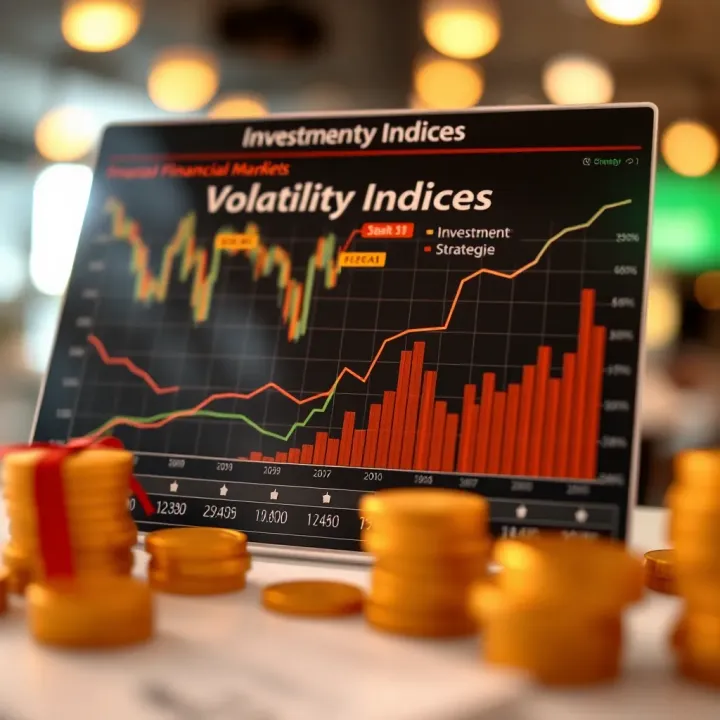
Volatility indices typically derive their values from the prices of options contracts. Options, such as calls and puts, allow traders to buy or sell a stock at a specified price by a certain date. The prices of these options embed market expectations about future price movements, which can be translated into implied volatility figures. For instance, if options premiums are high, it signals that traders expect bigger price swings ahead.
The CBOE’s VIX index, often called the “fear gauge,” uses a weighted average of options prices on the S&P 500 Index to estimate expected volatility over the next 30 days. By reflecting the market's consensus on future uncertainty, this data-driven approach offers investors a widely accepted benchmark.
Variance swaps are financial contracts that pay based on the difference between realised and expected variance (the square of volatility). This approach underlies much of the theoretical work on volatility indices. It involves calculating the expected variance by integrating implied volatilities across a broad range of strike prices for options expiring at a specific time.
Practically, this method captures the market’s expectation of how variable the underlying asset’s price will be. Traders use this approach for hedging against volatility risk or speculating on changes in volatility itself. It provides a precise way to estimate expected volatility but requires robust options data across many strikes, which might be challenging in less liquid markets.
Weighted price-weighted methods calculate volatility indices by assigning different weights to options’ implied volatilities, often based on their strike prices or trading volumes. This helps to smooth out distortions that come from thinly traded options or outliers. For example, options closer to the money often have greater influence as they better reflect immediate market sentiment.
This approach is practical for real-time index calculation, making it easier to update volatility estimates as market conditions change. It also helps mitigate liquidity issues by focusing on more actively traded options, relevant for markets like Nairobi Securities Exchange where not all derivatives have deep liquidity.
Liquidity – how easily a financial instrument can be bought or sold without affecting its price – directly influences volatility index accuracy. In thinly traded options markets, prices can be erratic, causing volatility estimates to jump unexpectedly or misrepresent actual risk.
In Kenya, for example, there’s limited options trading on NSE compared to more developed exchanges. This scarcity of options data means volatility indices based on local data can be less reliable, prompting investors to watch global indices alongside local ones for a fuller picture.
Calculating volatility indices inherently involves assumptions, like constant interest rates or normal distribution of returns, which may not hold in reality. These assumptions simplify modelling but can introduce biases.
If the market experiences sudden shocks or structural changes, the models might underestimate or overestimate risk. Investors should be aware that volatility indices are not perfect predictors but rather tools reflecting market consensus, requiring support from additional analysis.
Understanding the calculation behind volatility indices is key for using them effectively. They provide useful insights but come with caveats that anyone trading or investing should consider carefully.
Volatility indices offer more than just numbers—they reflect how investors feel about market risks. For traders and investors alike, these indices provide a snapshot of market sentiment that helps in planning and decision-making. Understanding volatility levels can prevent unexpected shocks, especially when markets turn turbulent.
The VIX, often called the "fear gauge," is a prime example of how volatility indices signal market mood. When VIX shoots up, it generally means investors anticipate bigger swings, usually downward pressure in stock prices. This surge often occurs during political uncertainty or economic shocks, such as during Kenya's 2022 general elections when global and local investors showed nervousness.
These indices act as a thermometer for market stress. For instance, a calm period with low volatility might encourage more buying, while a spike warns traders to exercise caution. Kenyan investors tracking the NSE (Nairobi Securities Exchange) can use global volatility indices to gauge future risks, as local markets often mirror shifts in international sentiment.
Investors often use volatility indices alongside derivatives to hedge portfolios against sudden market drops. For instance, buying options on the VIX or similar products can offset losses in equities during downturns. While such options aren't yet widespread in Kenya, savvy fund managers consider international volatility-linked securities as part of diversified strategies.
Volatility levels guide investors on when to rebalance portfolios. Higher volatility suggests increased market risk, prompting a shift towards safer assets like government bonds or cash. Lower volatility might encourage more exposure to equities or growth stocks. Nairobi-based fund managers, for example, might reduce exposure to cyclical industries during volatile periods, favouring defensive sectors such as telecommunications or utilities.
Volatility directly affects options prices. Options on stocks or indices become more expensive when implied volatility rises, reflecting greater expected price swings. This relationship influences the premiums traders pay, affecting their strategies. Kenyan traders using options on the NSE 20 index or other derivatives must factor in current volatility to price options realistically.
Some traders use volatility indices as signals to enter or exit trades. For example, a sudden rise in volatility might trigger short-term sell decisions to avoid sharp losses, while a drop could signal calmer conditions, inviting more aggressive buying. Momentum traders on Nairobi’s jua kali market often watch volatility trends to time their entry, avoiding unstable periods that could wipe out gains.
Ultimately, volatility indices help investors and traders understand market risk more deeply, preparing them to act wisely under shifting conditions. This knowledge is especially valuable in a market like Kenya’s, where global and local factors interplay closely.
Kenyan investors looking at the Nairobi Securities Exchange (NSE) can use volatility indices to gauge market uncertainty before buying or selling shares. When volatility spikes, it often signals increased market nervousness, meaning prices might swing sharply. For example, during election periods or global economic shocks, the NSE can become jittery. Tracking volatility helps investors decide whether to hold back or diversify to limit risk.
Fund managers in Kenya often adjust their portfolios based on volatility levels. A rising volatility index could prompt them to reduce exposure to riskier equities and shift towards safer assets like government bonds or cash equivalents. This approach helps protect portfolios from sudden market drops. Incorporating volatility data alongside traditional performance metrics gives managers a fuller picture, fostering smarter, more adaptive investment strategies.
While volatility trading is well established in global markets, it's still in early stages locally. Some Kenyan traders experiment with derivative products like options on NSE stocks, which rely on volatility measures to price premiums. These tools allow hedging against price fluctuations, effectively managing risks when markets turn volatile. However, the range of volatility-linked instruments remains limited, meaning opportunities are narrower compared to more developed markets.
One hurdle Kenyan investors face is limited access to advanced volatility products. The NSE and local brokers currently offer a narrow selection of derivatives, so direct trading in volatility indices is rare. Regulatory requirements and market depth also restrict product innovation. This can leave investors exposed during turbulent times, unable to effectively hedge through complex strategies like volatility swaps or futures common abroad.
Kenya's economy and financial markets are linked closely to global events. Volatility in major markets like New York or London tends to ripple through to the NSE as foreign investors adjust portfolios. For instance, sharp fluctuations in commodity prices, influenced by global volatility, affect Kenyan stocks in sectors like energy and agriculture. Understanding this transmission enables local investors to anticipate potential shockwaves and prepare accordingly.
During the 2008 financial crisis and the COVID-19 pandemic, the NSE saw marked spikes in volatility as global markets tumbled. Many Kenyan stocks dropped sharply as foreign capital retreated. Investors who tracked volatility indices internationally could better navigate these periods by timing market entries and exits more cautiously. These cases highlight why monitoring global volatility is equally important for Kenyan market participants.
Volatility indices offer a practical lens through which Kenyan investors and fund managers can manage risks, trade more strategically, and understand the broader influences shaping their local markets.
Key local uses include assessing NSE risks and shaping portfolio decisions.
Challenges persist in Kenya’s access to diverse volatility-related products.
Global volatility continues to impact Kenyan markets, underscoring a need for broad market awareness.
This understanding arms Kenyan market players with tools needed for more resilient investment practices in an interconnected financial world.
Volatility indices offer valuable insight into market uncertainty but come with limitations that traders and investors must understand. These indices do not predict whether prices will rise or fall — they reflect expected price fluctuations, not direction. Over-relying on volatility indicators alone can lead to mistakes, especially if one mistakes volatility spikes for imminent market crashes or rallies. Appreciating these limits helps clients make measured decisions instead of reacting to noise.
A common misconception is that a rising volatility index signals coming market drops, while falling volatility guarantees a calm bull run. However, volatility simply measures the expected range of price swings, not the trend itself. For example, during the 2008 global financial crisis, the VIX (Chicago Board Options Exchange Volatility Index) spiked even as markets were tumbling, showing fear but not timing of the market's bottom. Similarly, high volatility can happen during sharp rallies as well when markets swing widely but move upwards. Thus, volatility readings alone can’t guide directional trades without other signals.
Volatility indices may produce false alarms or exaggerated responses in certain cases. Sudden news events or rumours can cause a knee-jerk jump in implied volatility without sustained market impact. For instance, a political event in Kenya or East Africa might temporarily raise volatility on NSE stocks due to uncertainty but calm down once facts emerge. Traders who respond hastily could risk losses from whipsaws. Furthermore, liquidity constraints, especially in smaller markets or off-peak hours, can distort volatility readings and compound false signals. Recognising these hazards helps investors avoid panic-driven decisions.
Volatility indices make more sense when paired with fundamental analysis. Understanding company earnings, macroeconomic indicators like inflation, or government policy gives context to volatility moves. For example, if the NSE 20 shares index volatility rises alongside worsening GDP growth forecasts, the volatility spike reflects real economic concerns — guiding portfolio adjustments. On the other hand, if volatility jumps without fundamental changes, it may signal temporary market nervousness rather than a genuine shift.
Technical analysis tools can improve interpretation of volatility data. Momentum indicators such as the Relative Strength Index (RSI) or Moving Average Convergence Divergence (MACD) help identify whether price movements amidst volatility are overbought or oversold. Volume trends combined with volatility spikes add confirmation about the strength of price moves. For example, rising volatility with increasing trading volume and bearish MACD could indicate strong selling pressure on a stock listed on the Nairobi Securities Exchange, signalling a possible downturn. Using these methods together improves the quality of trading decisions.
Volatility indices shine when they supplement broader analysis, not act as standalone predictors. Understanding their limits lets you manage risks better and make smarter market moves.
In the Kenyan market, where external shocks can ripple fast, blending volatility readings with local economic data, company results, and technical signals helps investors navigate uncertainties with more confidence and less guesswork.
Discover how DB traders operate in financial markets, their strategies, skills, and tools, plus challenges they face in Kenya's trading scene 📈💼
📈 Learn how to spot the head and shoulders pattern in Kenyan markets. Understand its signals, common variations, risks, and tips to trade smarter with clarity.

Explore application derivation ☕️: learn its key concepts, techniques, benefits, challenges, and practical tips for Kenyan developers and businesses. 📱
📊 Master trading charts with this practical guide for Kenyan traders. Understand timeframes, patterns, and indicators to boost your investment decisions confidently.
Based on 5 reviews