
Understanding Derivative Trading in Kenya
Explore derivative trading in Kenya 📈 Learn types, risks, rewards & how to use these tools for smart investing, hedging, and managing portfolios wisely.
Edited By
Alexander Price
Forex trading is the act of buying and selling currencies with the aim of making a profit from changes in exchange rates. In Kenya, interest in forex trading has grown steadily, especially with easy access to online trading platforms and widespread use of mobile money like M-Pesa for deposits and withdrawals.
At its core, forex trading involves pairs of currencies—for example, USD/KES (US Dollar against the Kenyan Shilling). Traders speculate on whether one currency will strengthen or weaken compared to the other, buying if they expect the base currency to rise and selling if they anticipate a fall.
Unlike stocks, forex trades 24 hours a day on weekdays, covering global financial centres from London to Tokyo, which means Kenyan investors can engage anytime during their day or night. However, this also means prices can move quickly and require constant attention.
Kenyan investors should approach forex trading with caution, understanding the market’s volatility and the risks of leverage, where borrowed funds amplify both gains and losses.
You select a currency pair to trade, like EUR/USD or GBP/KES.
You decide to buy (go long) if you believe the first currency will strengthen or sell (go short) if you expect it to weaken.
The price difference when you close the trade determines your profit or loss.
For instance, if you bought USD/KES at 110.00 and sold at 112.00, you’d make a gain of KS for every US dollar traded, minus any transaction costs.
Easy access through mobile phones and platforms such as MetaTrader has lowered entry barriers. Plus, Kenya’s growing middle class and fintech-savvy youth see forex as a way to diversify income beyond traditional jobs or small businesses.
Still, many newcomers leap in without proper knowledge, risking big losses. That’s why grasping the basics—including market hours, currency factors, and risk management—is vital before placing real money on the line.
In the following sections, we will explain key concepts, useful strategies, and safety measures tailored to Kenyan investors, helping you trade forex wisely and confidently.
Forex trading, short for foreign exchange trading, is a dynamic financial activity where traders buy and sell currencies aiming to profit from changing exchange rates. In Kenya, this market has gained popularity due to increased internet access and mobile money platforms like M-Pesa, making it easier for everyday investors to participate.
Understanding forex trading is key before you begin trading because it helps investors recognise potential opportunities and risks. For example, knowing how currency values fluctuate due to economic events such as interest rate decisions by the Central Bank of Kenya (CBK) or political developments in neighbouring countries can make a difference in executing timely trades.
Forex trading involves exchanging one currency for another simultaneously. Think of it like swapping Kenyan shillings (KSh) for US dollars when you plan a trip abroad, but on a much larger and faster scale. Traders speculate on whether a currency will strengthen or weaken against another to buy low and sell high.
Unlike stock trading, the forex market operates 24 hours a day during weekdays, enabling round-the-clock opportunities. This constant availability matches well with Kenya’s timezone (EAT, UTC+3) and the global nature of trade and finance.
The forex market doesn't have a central exchange like the NSE (Nairobi Securities Exchange). Instead, it functions over-the-counter (OTC) — meaning trading happens electronically across global networks of banks, brokers, and individual traders.
Currency pairs form the foundation here; for instance, USD/KES expresses how many Kenyan shillings equal one US dollar. Prices move based on supply and demand, fundamentals (like economic data), and geopolitical events. For example, if there's political stability and increased exports in Kenya, the shilling might strengthen, affecting the USD/KES rate.
Brokers provide access to this market through platforms where traders place orders. These platforms offer tools like charts and indicators to analyse price movements and decide when to trade. Kenyan traders benefit a lot by using brokers who accept local payment options like M-Pesa, simplifying deposits and withdrawals.
The forex market’s accessibility and liquidity make it attractive but also risky. Educated trading decisions backed by local market understanding give Kenyan investors a better chance at success.
Understanding these basics lays a solid foundation before moving into strategies or account setups discussed later in this guide.
Understanding the key concepts in forex trading is essential for Kenyan investors who want to navigate the foreign exchange market wisely. These concepts shape the way trades are made and how profits or losses occur. Mastering them helps in making smarter decisions, managing risks better, and avoiding common pitfalls.
In forex trading, currencies are always traded in pairs, such as USD/KES (US Dollar against Kenyan Shilling) or EUR/USD (Euro against US Dollar). Each pair shows the value of one currency relative to another. For example, if the USD/KES rate is 110, it means one US dollar buys 110 Kenyan shillings.
Currency quotes have a base currency and a quote currency. The base currency is the first one listed, and the quote currency is the second. When you see a price like 110 KES on USD/KES, it means you need 110 Kenyan shillings to buy one US dollar. This helps traders speculate if the base currency will strengthen or weaken.
A pip represents the smallest price movement in a currency pair—typically the fourth decimal place—for example, a change from 110.0000 to 110.0001 in USD/KES is one pip. Kenyan traders often track pips closely because they show potential gains or losses.
A lot refers to the size of the trade. Standard lots are usually 100,000 units of the base currency, but smaller options like mini lots (10,000 units) or micro lots (1,000 units) are common for beginners. Suppose you buy a mini lot of USD/KES; you’re trading 10,000 US dollars against Kenyan shillings.
Leverage lets you control larger trades with a smaller deposit. For example, with 1:100 leverage, depositing KSh 10,000 allows you to trade KSh 1,000,000 worth of currency. This can magnify profits but also increases the risk of losses beyond your deposit, so Kenyan traders must use leverage carefully.
Brokers act as middlemen linking Kenyan traders with the global forex market. They provide access through trading platforms where you execute orders, view charts, and analyse trends. Selecting a reliable broker regulated by credible bodies such as CMA Kenya or international agencies is crucial.
Trading platforms like MetaTrader 4 (MT4) or MetaTrader 5 (MT5) are popular among Kenyan traders. They offer user-friendly interfaces, real-time quotes, technical indicators, and tools to help with analysis. Some brokers also provide mobile apps allowing trading on the go via M-Pesa funding and withdrawals.
Choosing the right broker and understanding how to use trading platforms is as important as knowing the market itself. It ensures your funds are safe, transactions are smooth, and you can react quickly to market changes.
Grasping these key concepts lays a solid foundation for anyone entering forex trading in Kenya. They bring practical clarity on how trades work, how costs and profits are measured, and how to engage the market efficiently through trusted intermediaries.
Getting started with forex trading in Kenya requires understanding several practical steps that ensure a smooth entry into the currency market. This section guides you through the essentials, from account setup to selecting the right broker, so you can start trading confidently.
To begin trading forex, you must open an account with a forex broker. This account will serve as your gateway to the market. Most brokers have online registration processes where you provide personal details and submit identification documents like your national ID or passport. For instance, brokers regulated by the Capital Markets Authority (CMA) in Kenya often require verification through the eCitizen portal or direct digital uploads to comply with Kenya's anti-money laundering regulations.
Once your account is approved, you'll usually start with a demo account to practise trading without risking real money. This step helps you familiarise with trading platforms such as MetaTrader 4 or 5 before committing real funds.
After opening an account, the next step is funding it. Kenyan traders benefit from local payment options integrated with forex brokers, making deposits straightforward. Mobile money platforms like M-Pesa are popular methods due to their accessibility and convenience. Some brokers also accept bank transfers from local banks such as Equity Bank, KCB, and Cooperative Bank.
Local funding cuts down on transfer fees and speeds up deposit times, meaning you can seize market opportunities faster. For example, funding your account via M-Pesa might take minutes compared to international wire transfers which could take days and incur higher charges.
Finding a trustworthy broker is key to protecting your investments. Look for brokers regulated by the CMA or reputable international bodies. Regulated brokers follow strict rules, ensuring your funds are safe and that trading practices are transparent.
Besides regulation, consider factors like spreads (the cost to trade), the trading platform’s usability, customer support quality, and whether they provide local-language assistance. For example, some brokers offer Kiswahili support and localised educational materials, making it easier for Kenyan traders to grasp market dynamics.
Always check broker reviews from Kenyan traders to avoid scams. Fraudulent schemes sometimes promise unrealistic returns and then disappear with your funds.
By following these steps—opening a verified trading account, funding it through trusted local channels, and selecting a reliable broker—you set a solid foundation to start forex trading in Kenya. This careful approach increases your chances of success and minimises avoidable risks.
Forex trading strategies form the backbone of a trader's approach in the currency markets. Having a good strategy helps Kenyan investors make informed decisions rather than relying on guesswork, which can lead to unnecessary losses. These strategies boil down complex market signals into manageable frameworks, guiding traders on when to enter, exit, or hold their positions.
Technical analysis studies past price movements and trading volumes to forecast future trends. Kenyan forex traders often use charts and technical indicators to spot patterns. For example, a common tool is the moving average, which smooths out price data over time to show the general direction of a currency pair. If the short-term moving average crosses above the long-term one, it can signal a buying opportunity.
Another popular indicator is the Relative Strength Index (RSI), which measures momentum by comparing recent gains and losses. An RSI above 70 might tell a trader that a currency is overbought and due for a dip, while below 30 could indicate oversold conditions ripe for a bounce. Practical application of these tools requires practice and careful observation of market conditions unique to currency pairs relevant in Kenya, such as USD/KES or EUR/KES.
Fundamental analysis looks at economic and political factors influencing currency values. For Kenyan investors, keeping track of economic reports like inflation rates from CBK (Central Bank of Kenya), GDP growth, or trade balances is crucial. Suppose CBK announces a rise in the Central Bank Rate; this typically strengthens the Kenyan shilling as it attracts foreign capital seeking higher returns.
Political events also sway forex markets. For example, election periods or government policy changes can cause sharp currency fluctuations. A Kenyan trader who understands these factors can anticipate potential market moves. Using fundamental analysis alongside technical signals creates a more balanced trading approach, reducing blind spots in decision-making.
Managing risk separates consistent traders from those who burn out fast. Risk management means limiting losses while protecting profits in volatile forex markets. Kenyan traders should never risk more than 1-2% of their total trading capital on a single trade — a rule that helps preserve funds through bad streaks.
Using stop-loss orders is a key technique; it automatically closes a trade when losses hit a specified level. For instance, if you buy USD/KES expecting the shilling to weaken but the market reverses, the stop-loss cuts your losses instead of letting them balloon. Diversifying trades, avoiding over-leveraging, and keeping trading journals to review past decisions are other vital practices.
Smart forex trading isn’t just about picking winners; it’s about managing your money wisely to stay in the game longer.
Kenyan forex traders benefit when these strategies are tailored to local realities like access to markets through mobile platforms, currency-specific volatility, and regional economic news. Combining technical tools, fundamental insights, and sound risk controls helps build a solid foundation for trading in the Kenyan forex market.
Trading forex in Kenya presents opportunities, but it also comes with risks that every trader should understand. Knowing these challenges helps you protect your capital and avoid pitfalls that can drain your funds fast.
Forex markets are volatile, with prices shifting rapidly due to global economic news and events. Sudden changes in commodity prices, political developments, or interest rate announcements can cause unexpected price swings. For instance, Kenyan traders noticed sharp forex fluctuations during the last general elections and times when inflation reports hit the headlines.
Leverage is another double-edged sword. While it can boost profits, it can also magnify losses quickly. Many local traders fall into the trap of using high leverage without a clear strategy, resulting in big losses that wipe out their accounts. Besides market risk, there is also liquidity risk—during off-hours or public holidays, trading volumes can thin out, making it harder to close positions at desired prices.
The forex space in Kenya, like in many other places, attracts fraudulent schemes promising huge returns with little effort. Many scams operate through social media adverts, offering unrealistic profit guarantees or using fake testimonials. Always be wary of anyone promising consistent daily returns above 5%—these are often too good to be true.
Protect yourself by verifying broker credentials, especially their licensing with Kenyan authorities like the Capital Markets Authority (CMA) or reputable international regulators. Stand clear of unregulated brokers or trading platforms demanding large upfront payments without clear terms. Also, be cautious with Telegram or WhatsApp groups that push ‘sure-win’ signals; several traders lose heavily due to misleading tips.
Kenya's financial regulator, the Capital Markets Authority (CMA), oversees forex and other investment markets to protect investors. In recent years, CMA has tightened its rules around forex trading, requiring brokers operating in Kenya to register and comply with specific standards.
This improves transparency and gives investors recourse if issues arise. However, many brokers operate offshore, beyond CMA’s direct reach, adding an extra layer of risk. Before trading, confirm if your broker is CMA-licensed or recognized by a credible authority. This step can safeguard you from unregulated entities and help ensure your funds are handled properly.
Understanding these risks and the regulatory framework is vital for Kenyan investors to trade forex wisely and steer clear of scams.
Forex trading is not a quick way to get rich; it demands caution, discipline, and continuous learning. By recognising common risks, avoiding fraud, and knowing the local rules, you increase your chances of successful trading in the Kenyan market.
Access to the right tools and resources can make a big difference in forex trading, especially for Kenyan investors operating within unique market and regulatory conditions. These tools help traders analyse market trends, execute orders efficiently, and keep up with global economic news that affects currency values. Without suitable resources, a trader may miss crucial signals or find it hard to navigate the fast-moving forex market.
Choosing a reliable trading platform is one of the first steps for any Kenyan forex trader. Platforms like MetaTrader 4 (MT4) and MetaTrader 5 (MT5) are widely popular because they offer detailed charting tools, automated trading options, and support for multiple order types. Safaricom’s M-Pesa integration with some brokers makes deposit and withdrawal seamless, keeping funds secure and accessible.
Another option gaining ground in Kenya is the use of mobile apps such as IQ Option and Plus500, which allow trading directly from smartphones. These apps are handy for busy traders who prefer to monitor the market and execute trades on the go, especially when commuting by matatu or while away from a desktop.
Additionally, some brokers provide proprietary platforms designed to cater specifically to the needs of Kenyan traders, including local language support and customer service tailored to Nairobi or Mombasa clients. It pays to test demo accounts first to find the platform that feels intuitive and suits your trading style.
Staying informed and continuously learning is a must in forex trading. Kenyan traders benefit from using educational resources that provide practical, localised insights. Websites such as the Capital Markets Authority (CMA) and Nairobi Securities Exchange (NSE) offer materials on regulations and market operations relevant to forex and broader financial markets.
Local forex forums and trading groups on platforms like WhatsApp or Telegram serve as valuable communities. In these groups, traders share tips, market news, and warnings about potential scams—which are a real risk in forex trading.
Moreover, many Kenyan brokerage firms organise free webinars and training sessions for their clients, covering technical analysis, fundamental analysis, and risk management techniques. These sessions provide an opportunity to interact directly with professionals who understand both global forex markets and local economic factors like inflation or government policy shifts.
Remember: mastering forex requires more than just capital and luck. Using the right trading tools and engaging with knowledgeable communities sharpens your skills and helps avoid costly mistakes.
By combining effective platforms and constant learning through trusted community channels, Kenyan investors can increase their chances of navigating the forex market with confidence and care.
Explore derivative trading in Kenya 📈 Learn types, risks, rewards & how to use these tools for smart investing, hedging, and managing portfolios wisely.
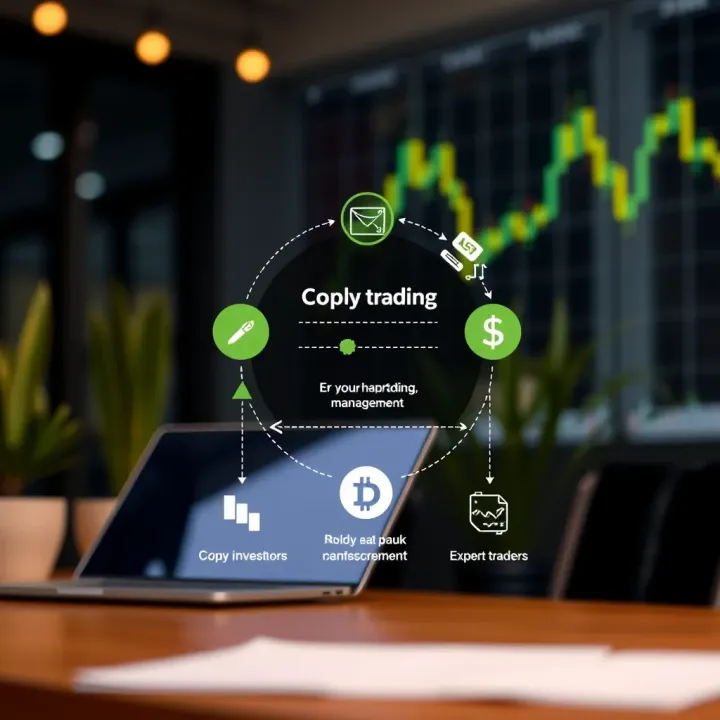
📈 Discover how Kenyan investors can benefit from copy trading! Learn to follow top traders, understand risks, and pick the right platforms easily.
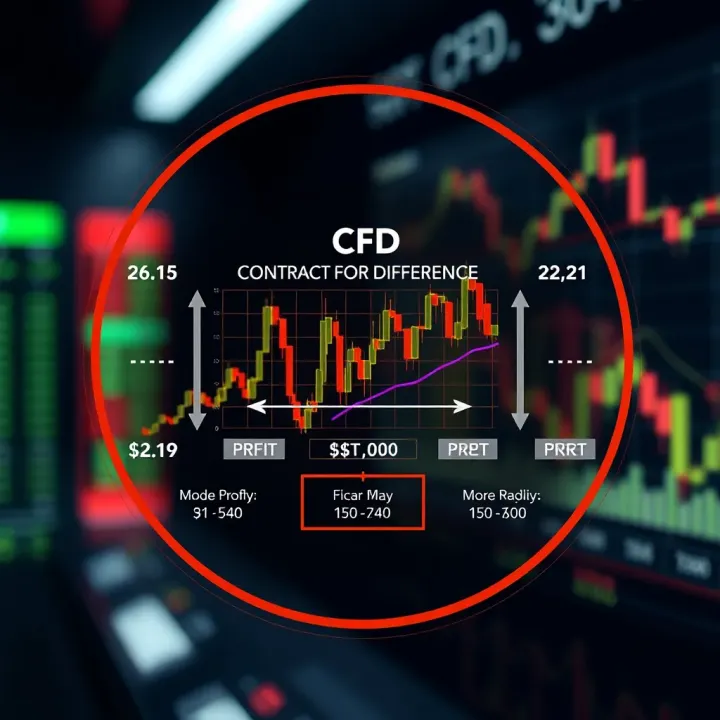
📈 Explore CFD trading basics for Kenyan traders, learn strategies, understand risks, and navigate local regulations to trade smartly.
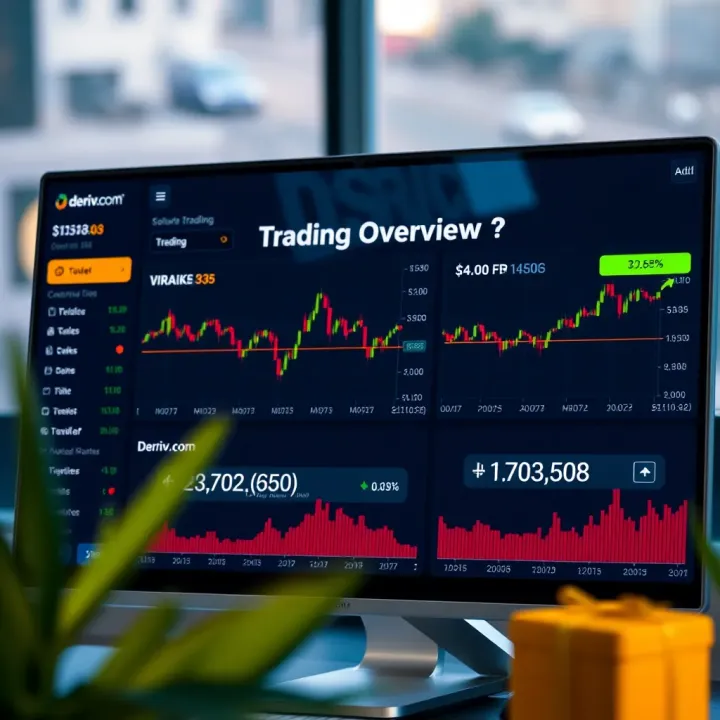
Explore Deriv.com in Kenya 🇰🇪: features, account types, trading tools, security, deposits, and support to trade confidently online 📈💼
Based on 15 reviews