

Understanding Bots: Roles and Impact Explained
🤖 Discover how bots work, their types, and role across sectors in Kenya and beyond. Learn about benefits, risks, and security to navigate the digital world smartly.
Edited By
James Thornton
'Dollar Printer FX' refers to the process where central banks, like the US Federal Reserve, influence foreign exchange (FX) markets by increasing the money supply—basically, "printing" more US dollars. This action can affect currency values worldwide, including the Kenyan shilling. Traders, investors, and policymakers watch such moves closely because they impact everything from import prices to investment opportunities.
Central banks don't literally press a button to print cash. Instead, they use monetary tools such as lowering interest rates or purchasing government bonds. When the Fed buys bonds, it injects liquidity into the economy, increasing the amount of dollars circulating. This rise in dollar supply often leads to depreciation against other currencies.
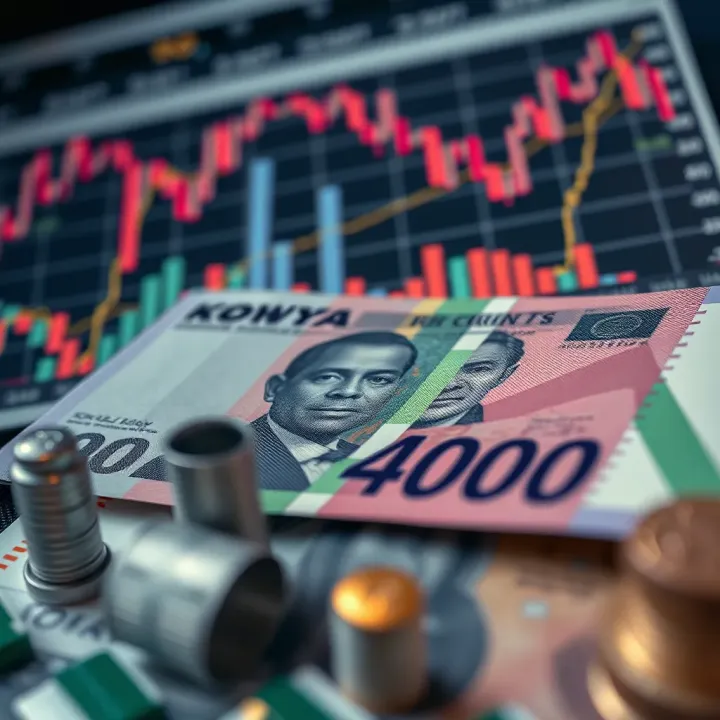
For Kenya, where the shilling's strength depends partly on the dollar's value, these shifts can be quite significant. For example, when the dollar weakens due to aggressive money printing, Kenyan importers may find foreign goods cheaper, reducing inflation pressures. On the flip side, exporters might get less shilling value for their dollar earnings.
Understanding these mechanics is vital for traders and investors dealing with forex markets, as sudden moves in dollar supply can trigger volatile exchange rate swings.
Increased Volatility: Money printing often creates unpredictability in currency prices, making timely decisions crucial.
Trading Opportunities: Sharp shifts in dollar value open windows for profit, but they also carry higher risk.
Risk Management: Being aware of central bank policies helps traders protect portfolios through hedging or diversifying.
Suppose the Fed announces a new round of quantitative easing, effectively "printing" more dollars. Forex traders in Nairobi might expect the Kenyan shilling to strengthen against the dollar, prompting them to buy shillings anticipating gains. Meanwhile, businesses importing electronics priced in dollars might plan purchases sooner to avoid higher costs if the dollar later rebounds.
In summary, Dollar Printer FX describes how central banks’ money supply decisions affect currency values and economic realities. For Kenyan traders and investors, keeping an eye on these policies can inform smarter market moves and risk planning.
Dollar Printer FX refers to the increase in the supply of the US dollar through central bank activities, predominantly the US Federal Reserve. This term has gained popularity among traders and economists as a way to describe how these actions influence currency markets globally, including the forex (foreign exchange) environment. Understanding Dollar Printer FX matters because the US dollar plays a critical role as a reserve and transaction currency worldwide, affecting exchange rates, inflation, trade balances, and investment flows.
For instance, when the US prints more dollars, it can weaken the dollar’s value relative to other currencies like the Kenyan shilling. This impacts exporters and importers in Kenya, who may face higher costs or fluctuating revenue when converting currencies. Traders and investors must watch these dynamics to manage risks effectively and identify opportunities.
The phrase “Dollar Printer FX” emerged informally among traders and analysts to characterise the process where the US Federal Reserve injects new dollars into the financial system. The 'printer' metaphor highlights how the Fed’s actions resemble printing money, though the mechanism is typically electronic rather than physical banknotes. The term captures the idea that increases in the dollar supply can influence exchange rates, causing ripple effects in currency markets worldwide.
This expression resonates with market participants because it directly links central bank policies to forex volatility. For example, a sudden announcement of increased dollar supply can prompt the shilling or euro to strengthen as traders anticipate shifts in demand.
The US dollar remains the dominant global currency, composing about 60% of global foreign exchange reserves. Changes in dollar supply influence its purchasing power internationally. When the Fed increases liquidity by expanding the dollar supply, it tends to lower the dollar's value relative to other currencies. This phenomenon affects forex rates and can alter trade competitiveness for countries like Kenya.
In practice, a surge in dollar supply can make Kenyan exports cheaper for overseas buyers, improving demand. Conversely, imports priced in dollars might get more expensive locally, contributing to inflationary pressures. Forex traders watch these supply changes to anticipate currency pair movements such as USD/KES or USD/EUR.
Central banks, including the US Federal Reserve, control the money supply primarily through monetary policy tools. They adjust interest rates and utilise open market operations, such as buying or selling government securities, to influence liquidity. By purchasing securities, the bank injects money into the economy, effectively raising the money supply. Conversely, selling securities withdraws money, reducing available funds.
This direct influence on liquidity affects currency values by changing borrowing costs and investor confidence. For example, lower interest rates may encourage borrowing and spending but may also reduce the currency's value as returns on assets fall.

Quantitative easing (QE) is a specific policy where central banks buy longer-term assets like government bonds to boost money supply during economic slowdowns. The Fed employed QE extensively after the 2008 financial crisis and during the COVID-19 pandemic. By increasing dollar supply through QE, the Fed aimed to keep borrowing costs low and encourage investment.
The effects of QE often include a weaker dollar due to higher supply, wider spreads between currencies, and increased volatility in forex markets. For Kenyan traders and businesses, these shifts mean adapting strategies to changing import costs and export competitiveness. QE can also lead to inflation concerns if excess liquidity circulates without matching economic growth.
Understanding how Dollar Printer FX operates helps investors, traders, and policymakers foresee currency market trends and adjust to evolving economic conditions both locally and globally.
Dollar Printer FX impacts Kenya via exchange rates and inflation
The US Federal Reserve ‘prints’ dollars mainly through electronic means
Central banks’ monetary tools shape currency supply and demand
Quantitative easing is a key driver of dollar liquidity and market shifts
This foundation prepares you to explore the broader effects and responses in subsequent sections.
Understanding the impact of Dollar Printer FX on both global and local economies is key for traders, investors, and policymakers. This section focuses on how shifts in the US dollar supply ripple through currencies, markets, and investment flows, with a special look at Kenya's economic landscape.
When the US central bank increases dollar supply significantly, the dollar's value may weaken. For emerging markets like Kenya, this often means local currencies lose value against the dollar. For example, when the dollar strengthens, the Kenyan shilling usually weakens, raising prices for imported goods such as fuel, machinery, and technology. This depreciation makes everyday essentials more expensive, pushing inflation upward.
Inflation hits the common mwananchi’s pocket hard, as household budgets stretch thinner. Pay rises often lag behind inflation, causing affordability challenges. In 2021, Kenya experienced this vividly when rising fuel costs caused food prices to climb, impacting low-income families the most. Inflation triggered by dollar supply changes isn’t uniform but tends to affect essentials, making it a major concern for consumer welfare.
Changes in the dollar supply can also shift capital flows. When the US dollar strengthens, investors tend to pull money from emerging markets into safer dollar assets like US Treasury bonds. This capital flight can tighten liquidity in countries like Kenya, making it costlier for businesses to borrow and invest.
On the other hand, a weaker dollar often encourages investment into emerging markets seeking higher returns. For example, during periods of quantitative easing in the US, foreign direct investment (FDI) into Kenya increased as investors searched for yield. However, these flows can be volatile, leaving Kenya’s economy vulnerable to sudden swings when investors move money quickly in or out.
Exchange rates react not only to real economic changes but also to what traders expect will happen in the future. When market players anticipate the US dollar will weaken due to increased supply, they may start selling dollars or betting against it.
Speculative trading on currency markets amplifies these moves, causing short-term volatility. Imagine a scenario where rumours of more quantitative easing by the US Federal Reserve spread; Kenyan forex traders might quickly adjust their positions, affecting both the dollar and the Kenyan shilling exchange rates. Such speculation can sometimes disconnect exchange rates from underlying economic fundamentals temporarily.
Speculative activity means exchange rates can swing sharply, creating risks for importers, exporters, and anyone holding foreign currency.
The US dollar’s changing value also shapes Kenya’s trade balance. A stronger dollar makes Kenyan exports priced in shillings cheaper for foreigners holding dollars, potentially boosting sales of tea, coffee, and horticultural products. Conversely, Kenyan importers face higher costs for goods priced in dollars, such as electronics and petroleum, squeezing profit margins.
When the dollar supply increase causes depreciation of the shilling, import bills spike, pushing inflation and possibly widening the trade deficit. Kenya’s reliance on certain imports means exchange rate shifts have a direct impact on business costs and consumer prices, affecting competitiveness and economic stability.
Understanding how Dollar Printer FX influences these aspects helps businesses hedge risks and governments to craft policies that cushion negative effects while maximising opportunities.
The concept of Dollar Printer FX carries significant risks and challenges that traders, investors, and policymakers must navigate carefully. Central banks' actions to increase the supply of the US dollar can ripple through currency markets, affecting inflation, purchasing power, and market volatility. Understanding these risks helps in making informed decisions, whether you're managing an investment portfolio or assessing broader economic impacts.
Excess supply of the US dollar in global markets can trigger inflation, especially in economies heavily reliant on imports priced in dollars. When central banks pump more dollars into the system, the increased money supply can lower the dollar's value, pushing up the cost of imported goods. For countries like Kenya, which import a variety of essentials and fuel priced in dollars, this translates directly to higher prices locally.
The inflationary impact doesn't stop at prices; it influences the everyday budgets of Kenyan households. Families find essentials like cooking oil, sugar, and maize flour becoming more expensive as the shilling weakens against the dollar. This squeeze on purchasing power affects low- and middle-income earners the most, leaving them with less disposable income and forcing tighter household budgeting or cutting back on non-essentials.
Currency pairs involving the US dollar often experience increased volatility when central bank policies change. Dollar Printer FX effects can cause sharp swings in exchange rates, making it challenging for forex traders to predict short-term movements. For instance, announcements from the US Federal Reserve regarding changing monetary policy often lead to sudden spikes or drops in the USD/KES pair, affecting open positions.
To manage these risks, traders and investors use several strategies. Currency hedges like forward contracts or options allow locking in exchange rates to protect against unwanted fluctuations. Diversifying currency exposure across multiple pairs reduces over-reliance on any single currency's performance. Staying updated on central bank policies and economic indicators is critical; timely information can help anticipate policy shifts and adjust positions proactively.
Managing risks linked to Dollar Printer FX demands close attention to monetary policy changes and practical tools to cushion against exchange rate swings.
Being aware of these challenges equips market participants to avoid significant losses and better protect their investments amid unpredictable currency market movements caused by the expanding US dollar supply.
The dynamics around Dollar Printer FX significantly shape currency markets, especially in developing economies like Kenya's. Understanding how to navigate these shifts can help traders and businesses anticipate market movements and make the most of currency fluctuations. This section offers practical guidance on spotting market signals, managing currency risks, and recognising the role of government actions.
Market signals are vital cues derived from changes in the US dollar supply and monetary policies that affect exchange rates. For Kenyan businesses, paying attention to these signs means staying alert to policy announcements or quantitative easing moves by the US Federal Reserve. For instance, when the Fed hints at printing more dollars, Kenyan importers might expect the shilling to weaken, making imported goods pricier. Traders can take advantage by adjusting their positions accordingly before the market fully reacts.
A practical example is the forex market reaction during periods of US stimulus. Businesses that follow such signals can better time their foreign currency purchases or sales, avoiding losses from sudden shilling depreciation. The key lies in monitoring official news, market trends, and forex rates regularly to read the market’s mood accurately.
Hedging tools like forward contracts or options allow traders to lock in exchange rates today for future transactions, shielding them from sudden shilling volatility caused by changes in the US dollar supply. Kenyan exporters can use hedging to guarantee foreign currency earnings despite shifts in the forex market. Similarly, businesses relying on imported raw materials benefit by limiting cost spikes.
Diversification involves spreading investments or business activities across different currencies, sectors, or geographies. For example, a Kenyan investor exposed solely to US dollar assets might consider adding euro or CFA franc instruments, reducing risks linked to dollar fluctuations. Companies engaged in both export and local markets diversify their revenue sources, cushioning themselves from sharp exchange rate swings linked to Dollar Printer FX.
Kenya's Central Bank of Kenya (CBK) uses monetary policy tools to combat shilling volatility triggered by global dollar movements. Raising interest rates can attract foreign capital, supporting the shilling's value, while selling foreign currency reserves helps smooth sudden swings. For example, during major dollar liquidity surges, CBK may intervene in the forex market to lessen extreme shilling depreciation.
These measures help maintain economic stability, keeping inflation in check and protecting consumer purchasing power. Businesses gain from a more predictable operating environment, reducing costs linked to currency uncertainty.
Regulators like CBK and the Capital Markets Authority (CMA) ensure that forex trading and currency-related financial products operate transparently and fairly. They set rules requiring disclosure of risks in currency derivatives and monitor for market abuse. This protects investors and maintains confidence in Kenya’s financial system.
Financial institutions, including banks and forex bureaus, play a crucial role in offering hedging products and timely market information to clients. For example, banks provide forward contracts to businesses concerned about shilling volatility. Their expertise enables traders and investors to make informed decisions, benefiting from Dollar Printer FX shifts rather than being adversely affected.
Navigating Dollar Printer FX requires active monitoring, strategic use of financial tools, and understanding the broader policy landscape. By doing so, Kenyan businesses and traders can reduce risks and seize opportunities amidst currency market fluctuations.
🤖 Discover how bots work, their types, and role across sectors in Kenya and beyond. Learn about benefits, risks, and security to navigate the digital world smartly.

Explore Olymp’s roots from Mount Olympus in Greek mythology to modern culture and geography, understanding its impact on stories, beliefs and everyday references 🏔️📚✨
🤖 Discover how robot trading uses algorithms to buy and sell stocks with little human input, shaping Kenyan markets and helping investors trade smarter and faster.

Explore HotForex in Kenya 🇰🇪 — learn about account types, trading tools, payment options like M-Pesa, and support to trade confidently on this global platform.
Based on 8 reviews