

Using M-Pesa with Forex Brokers in Kenya
Learn how to use M-Pesa for smooth forex trading in Kenya 🇰🇪. Discover practical steps, security tips, and how to pick brokers accepting M-Pesa for hassle-free deposits and withdrawals 💸.
Edited By
Ethan Collins
Forex trading in Kenya has seen steady growth as more Kenyans look for flexible ways to invest and increase their income. One key factor driving this rise is the ease of funding accounts and withdrawing profits using M-Pesa, Safaricom’s popular mobile money service. For many traders, M-Pesa offers a local, secure, and fast solution that avoids delays common with traditional bank transfers.
M-Pesa’s widespread network makes it accessible even in rural areas where banks might not have a strong presence. This convenience allows users to deposit funds directly into their forex trading accounts and withdraw earnings quickly, often in just a few minutes. Brokerages operating in Kenya increasingly support M-Pesa transactions, recognising its role in driving participation from the local market.
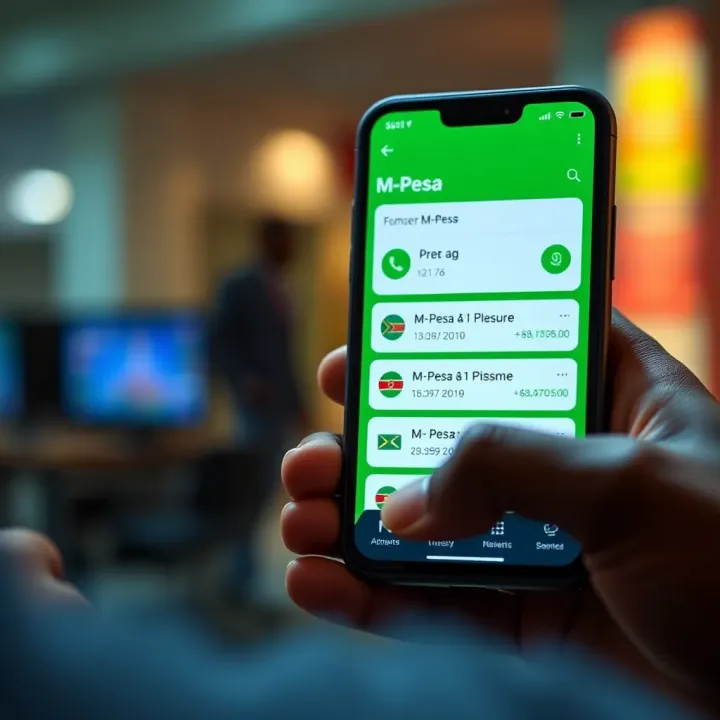
Using M-Pesa for forex trading doesn’t just mean easier transactions; it also lowers the barriers for new traders. Instead of needing a bank account or credit card, anyone with a mobile phone can start with a modest deposit simply by sending money from their M-Pesa wallet. This model fits well with Kenya’s vibrant hustler economy, where many people juggle informal work and looking for ways to grow savings or generate extra cash.
If you’re planning to trade forex using M-Pesa, it's wise to pick brokers regulated by the Capital Markets Authority (CMA) to ensure your funds are protected.
While M-Pesa brings many benefits, traders must still be cautious. The forex market is highly volatile, so having a reliable and transparent payment process can help manage risks but not eliminate them. Knowing how deposits and withdrawals work, along with understanding trading fundamentals, prepares you for smoother experiences.
In the sections ahead, this guide will break down how to fund your forex account with M-Pesa, step-by-step withdrawal procedures, common fees involved, and tips to avoid pitfalls. Along with practical steps, it highlights important risks to consider and how you can stay safe in this fast-moving market.
This article serves both new and experienced Kenyan traders who want to make the most of local mobile money solutions while navigating the exciting but demanding world of forex trading.
Grasping the basics of forex trading is essential for anyone interested in the Kenyan market. Forex, or foreign exchange, involves buying and selling currencies to take advantage of their varying values. This is not just a niche activity for big banks or corporations; many Kenyans now participate in forex trading thanks to accessible platforms and mobile technologies like M-Pesa.
The forex market is the world’s largest financial market, where currencies from different countries are exchanged. It operates 24 hours a day, five days a week, mainly because it spans different time zones, from Asia to Europe and America. For Kenyan traders, this means there is flexibility to trade at convenient hours, whether early morning before the workday starts or late at night.
Forex trading usually involves pairs, where one currency is exchanged for another. Popular pairs include USD/KES (US Dollar/Kenyan Shilling), EUR/USD (Euro/US Dollar), and GBP/USD (British Pound/US Dollar). The USD/KES pair is especially relevant in Kenya as it relates directly to the local currency. Knowing these pairs helps traders focus on markets where they can understand both economic factors and currency behaviour.
Trading involves predicting if one currency will strengthen or weaken against another. For example, if you believe the US dollar will strengthen against the Kenyan shilling, you buy USD/KES. If the prediction turns out right, you sell later for a profit. Trades are done through brokers who provide digital platforms where you can place orders using leverage to increase buying power—though this comes with more risk.
The forex market's volatility presents chances of good returns, especially for traders who can spot trends and act swiftly. Kenyan traders are drawn by stories of significant profits, though the market demands discipline and knowledge. Unlike fixed-income investments, forex offers the chance to earn from both rising and falling markets.
Mobile phones and M-Pesa have reshaped trading in Kenya by removing barriers that once demanded physical bank visits or lengthy paperwork. Today, with just a smartphone and a good internet connection, anyone in Nairobi or as far as a rural town can fund an account, check live rates, and execute trades from wherever they are.
Several brokers now specifically support M-Pesa payments, making forex trading more user-friendly. Platforms like HotForex, XM, and FXTM offer local deposit and withdrawal options, catering to Kenyan needs. Additionally, these platforms often provide education resources and demo accounts, helping new traders learn without risking real money.
Forex trading in Kenya is not just about speculative gains; it's becoming a practical option for diversifying income streams thanks to mobile technology and localised trading platforms.
Understanding these points sets the stage for comprehending how M-Pesa integrates seamlessly with forex trading, empowering more Kenyans to tap into global markets.
M-Pesa has become the backbone of everyday transactions across Kenya. Its reach extends from busy Nairobi estates to remote rural villages, making it a natural choice for online payments, including forex trading. With over 30 million users, M-Pesa offers unparalleled convenience that traditional banking cannot match. Most traders already have an M-Pesa account, so using it for forex funds means less hassle and faster transactions.
The widespread acceptance of M-Pesa among merchants and service providers makes it easy to integrate with forex brokers. People can send and receive money quickly without needing a bank account, which suits many Kenyan traders who rely primarily on mobile money. The simple interface and network of agents provides accessibility even where internet access may be patchy.
One key benefit of M-Pesa is its speed. Deposits to forex accounts via M-Pesa are often instant or processed within minutes, allowing traders to react quickly to market movements. Besides speed, the security framework around M-Pesa transactions is robust, with PIN protection and transaction SMS alerts adding layers of safety.
M-Pesa transactions are also transparent and easy to track, making record-keeping smoother for tax and accounting purposes. Compared to bank transfers, M-Pesa charges lower fees, and clients avoid unnecessary bank queues or paperwork. This ease has encouraged many forex traders to choose M-Pesa over other payment methods.
Funding your forex account through M-Pesa involves a straightforward process. Usually, you start by logging into your trading platform and selecting 'Deposit via M-Pesa' as the payment method. The platform will display a paybill or till number, which you enter in your M-Pesa menu under ‘Lipa Na M-Pesa’ followed by the amount you wish to deposit and your account reference.
Once you confirm the payment with your M-Pesa PIN, the funds typically appear in your forex account within a short time. Always check that the broker supports M-Pesa deposits before creating an account, as not all platforms handle mobile money. Among popular brokers in Kenya are those regulated by CMA Kenya, often listed on platforms supporting M-Pesa payments.
Common challenges include mistyping the till or paybill number or delays due to network issues. To avoid these, double-check numbers carefully and trade during peak M-Pesa service hours. If a deposit does not reflect, contacting the broker's customer support promptly helps resolve matters quicker.
Withdrawing forex profits via M-Pesa similarly requires choosing the withdrawal option on your broker’s platform. Provide your mobile number registered with M-Pesa, enter the amount, and submit the request. Brokers often verify withdrawal details before processing; this safeguards against fraud but may add some wait time.
Typically, withdrawal timelines range from a few minutes to a couple of working days, depending on the broker’s policies and M-Pesa network status. Fees charged for withdrawals vary; some brokers absorb the cost while others deduct a small percentage. It's wise to review these terms to manage your expectations around net earnings.
To verify successful transactions, check your M-Pesa statement or confirm with the agent if you’re in an area with limited mobile reception. Always keep screenshots or SMS confirmations as proof in case of disputes. Reliable brokers maintain transparent withdrawal histories on their platforms.
Using M-Pesa for funding and withdrawing in forex trading combines convenience, affordability, and accessibility, making it a preferred method for Kenyan traders navigating the volatile forex market.
Safety and regulation are at the heart of trust in any financial activity. When trading forex through M-Pesa, knowing the legal framework and safeguards in place helps protect your funds and personal data. Kenyan authorities have put certain rules around forex trading and mobile money to shield users from fraud, scams, and dishonest brokers.
Kenya's Capital Markets Authority (CMA) oversees forex trading inside the country. The CMA licenses and monitors brokers to make sure they follow rules on fair trading, transparency, and reporting. For example, a CMA-licensed broker must provide clear information about risks and fees. This gives traders confidence that they’re dealing with trustworthy companies and not fly-by-night operators.
The Central Bank of Kenya (CBK) regulates mobile money systems like M-Pesa. CBK ensures that these payment methods adhere to financial laws, protect user funds, and prevent money laundering. This supervision keeps the M-Pesa platform reliable for deposits and withdrawals related to forex trading. Without CBK’s oversight, there would be more chances of transaction failures or misuse of mobile money.
Only brokers that meet strict standards by the CMA get licensed. These include having enough capital, secure client fund segregation, and clear dispute resolution mechanisms. Licensed brokers provide a safeguard so traders can recover money if disputes arise. They are also regularly audited. Kenyan traders should always confirm broker licensing before committing funds, especially when using M-Pesa to transfer money.
Identifying a legitimate forex broker prevents many headaches. Traders should check that the broker appears on the CMA’s official list and has a physical office in Kenya or a transparent international presence. Unlicensed brokers often promise unrealistic returns and handle withdrawals poorly, putting funds at risk.
Scams involving mobile payments like M-Pesa are unfortunately common. For instance, some fraudsters send fake notifications to trick traders into sending money. Others pose as brokers asking for deposits outside official platforms. Always use brokers who accept M-Pesa deposits only through their official websites or apps, and never share your M-Pesa PIN or impersonation codes.
Keeping M-Pesa transactions secure will protect your money in the forex market. Change your M-Pesa PIN regularly and avoid using public Wi-Fi when conducting trades or transfers. Document all deposit and withdrawal receipts to resolve any later questions. Also, if a transaction fails or seems delayed, contact both M-Pesa customer care and your broker immediately.
Staying alert and informed about regulations and security practices makes forex trading with M-Pesa a safer experience. Checking licences, securing your mobile money, and spotting scams early can save your hard-earned KSh.
By understanding these safety ropes, you’ll trade more confidently, knowing your funds and data are better guarded under Kenya’s regulations.
Using M-Pesa to fund forex trading accounts in Kenya is quite convenient, but it's not without its risks and challenges. Understanding these factors helps traders avoid costly mistakes and manage their investments wisely. This section breaks down the main financial and technical challenges faced by traders relying on M-Pesa.
Forex trading is inherently volatile. Currency prices often fluctuate rapidly due to geopolitical events, economic reports, or even market sentiment. Leveraging trades can amplify profits, but it can also multiply losses just as fast. For example, a trader using leverage of 1:100 stands to lose their initial investment very quickly if the market moves against their position. This is why many brokers warn against over-leveraging or trading without proper knowledge.
In Kenya, where many rely on M-Pesa as the payment method, a sudden loss might mean using mobile funds meant for everyday expenses. This overlap can expose families to financial hardship, illustrating why managing leverage carefully is critical.
Effective loss management goes beyond just stopping at losses. It means setting clear limits using stop-loss orders and only risking a small percentage of the trading capital on a single position. For instance, a disciplined trader might risk only 1-2% of their total capital per trade to reduce the impact of a losing streak.
Moreover, Kenyan traders need to factor in M-Pesa transaction costs and ensure enough funds remain post-trade to avoid liquidity problems. Having a plan for what to do when losses occur, rather than chasing losses blindly, helps protect your M-Pesa funds and overall financial wellbeing.
M-Pesa transactions are usually fast, but sometimes delays or failures happen, especially when dealing with brokers' payment gateways. These glitches can delay deposits, preventing timely market entry. A trader might miss a critical trade opportunity simply because their deposit hasn't cleared.
For withdrawals, a failed M-Pesa transaction can stall profits withdrawal, causing frustration and financial strain. To avoid this, always confirm the correct M-Pesa number is used and keep transaction receipts until funds reflect in your trading account or wallet.
Forex trading demands good internet and network coverage, but some parts of Kenya still suffer patchy connectivity. Poor network strength can cause disruptions during trade execution or while managing open positions, increasing exposure to losses.
Besides poor network quality, bursts of high traffic often slow M-Pesa transaction times, especially during peak hours. Traders should therefore try to schedule trades and payments during off-peak times or invest in reliable data bundles to ensure smooth connectivity.
In cases where M-Pesa transactions related to forex trading go wrong—a deposit lost, a double payment, or withdrawal not received—having clear dispute resolution options matters. Safaricom provides customer support for M-Pesa, but resolving issues with brokers often requires direct communication with the broker’s support.
Kenyan traders are advised to work with licensed brokers regulated by the Capital Markets Authority (CMA), who usually have transparent complaint procedures. Keep detailed records of every transaction to make dispute resolution straightforward.
Always remember, while M-Pesa adds convenience and local accessibility to forex trading, vigilance on financial risks and technical issues is crucial to protect your investments and avoid unnecessary losses.
By understanding these risks and challenges, traders can prepare better and navigate the growing opportunities forex trading coupled with M-Pesa brings to Kenya’s financial landscape.
Navigating forex trading with M-Pesa smoothly hinges on a few key practices. These tips matter because they help you avoid common pitfalls and safeguard your funds. In Kenya's fast-digitising markets, practical strategies can make the difference between a neat profit and irritating setbacks.
Checking broker licences and reviews is the first step. Before depositing any money, verify that the broker operates under a recognised authority like CMA Kenya. A valid licence means the broker follows Kenyan rules designed to protect traders. Besides official documentation, look up online reviews from other Kenyan traders. For example, brokers with poor withdrawal feedback or hidden charges should raise red flags. This due diligence prevents encountering scammers who promise the sky but vanish when you try to cash out.
Assessing deposit and withdrawal terms is equally vital. Some brokers impose high minimum deposit amounts or charge hefty fees on both deposits and withdrawals. With M-Pesa, you want smooth, affordable transactions. A broker that accepts deposits as low as KSh 1,000 and allows withdrawals within 24 hours suits most Kenyan traders. Check if the broker supports direct M-Pesa deposits to avoid unnecessary steps. Also, understand if there are any limits on trading after deposits or charges for currency conversion, especially when trading in foreign currencies.
Regularly updating your M-Pesa PIN and app increases your account’s security. Keeping the M-Pesa app up to date ensures you have the latest security fixes. Changing your PIN occasionally also blocks unauthorised access, especially since mobile phones can be lost or stolen. For instance, a trader who updated their app last month avoided a recent phishing scam targeting outdated M-Pesa versions.
Keeping transaction records is a habit that pays off. Always save your deposit and withdrawal confirmations, whether via screenshots, emails, or printed receipts. In case of disputes with brokers or M-Pesa transaction delays, this documentation is your proof. It also helps track your profits, losses, and tax obligations.
Using trusted internet connections keeps your transactions safe. Avoid public Wi-Fi at kiosks or crowded spots when sending money to your trading account. Use your home or office connection, or your smartphone’s data bundle with a VPN if possible. Unsecured networks increase risks of interception or fraud, which can lead to lost funds.
Utilising demo accounts can build your confidence without risking real money. Most reputable brokers offering M-Pesa transactions also provide demo accounts. Practise trading Kenyan shilling pairs or global currencies with virtual money to understand price moves, timing, and order types before going live.
Following market news relevant to the Kenyan shilling helps you anticipate currency moves around local events. For example, tracking Kenya’s GDP releases, political developments, or CBK monetary policy changes allows traders to make better-informed decisions. Media like Business Daily or The Standard can supply timely updates.
Joining local trading communities encourages learning from peers. Many Kenyan forex traders share tips, warn about fraudulent brokers, and discuss strategies through WhatsApp groups, Facebook pages, or meetup forums. Engaging with these groups exposes you to real experiences and updates not always obvious in broker materials.
Making use of these tips not only enhances your trading experience but can also protect your financial wellbeing when using M-Pesa for forex trading.
By focusing on verified brokers, strong transaction security, and continuous learning, you set yourself up for smarter trading in Kenya's dynamic forex scene.
Learn how to use M-Pesa for smooth forex trading in Kenya 🇰🇪. Discover practical steps, security tips, and how to pick brokers accepting M-Pesa for hassle-free deposits and withdrawals 💸.

Interested in forex trading? Learn how currency exchange works, key strategies, risks, and tips tailored for Kenyan investors to trade smartly 💱📈.
Discover how to trade forex online in Kenya with practical tips on opening accounts, using M-Pesa, managing risk, and avoiding common mistakes 📈💻💸
📈 Learn common forex trading patterns Kenyan traders use to boost their decisions. Download clear PDF guides with pattern charts for confident market analysis.
Based on 10 reviews