

A Practical Guide to Crypto Trading in Kenya
📈 Explore a practical guide to crypto trading in Kenya! Learn key strategies, risk management, and essential tools to trade cryptocurrencies confidently.
Edited By
Henry Lawson
Trading offers Kenyans an avenue to grow wealth by buying and selling financial assets like stocks, forex, and commodities. However, success in trading doesn’t come just from luck or guesswork—it requires clear understanding, discipline, and methodical learning.
Before starting, it's important to know that trading exposes you to real financial risk. Unlike saving money in a bank, trading involves actively taking positions in markets where prices can move against you, sometimes very quickly. Therefore, learning how to manage these risks must be a priority from day one.

There are several key trading types to know:
Day trading: Buying and selling assets within the same day to capture short-term price moves.
Swing trading: Holding positions for a few days or weeks to benefit from price swings.
Position trading: A longer-term approach, keeping assets for months or even years.
Scalping: Quick trades lasting seconds or minutes aimed at tiny profits repeated many times.
Each style requires different skills, capital, and risk tolerance. For instance, scalping needs fast decisions and low transaction costs, while position trading relies on fundamental analysis and patience.
For Kenyans, you can trade locally listed stocks on the Nairobi Securities Exchange (NSE), or access international markets through brokers offering forex, commodities, and US or European stocks. Mobile payment systems like M-Pesa support funding trading accounts with ease, making trading more accessible.
Equipping yourself with the right tools is also essential. This includes reliable trading platforms, access to real-time price data, economic news, and charting software to analyse price movements. Apps and websites from local brokers or global providers like MetaTrader help traders monitor markets efficiently.
Starting small and practising with demo accounts can save you from costly mistakes. Always remember that no strategy performs well all the time; learning to manage losses and stick to your plan is what sets skilled traders apart.
Finally, successful trading demands continuous learning. Markets evolve, economic conditions change, and your strategies must adapt. Joining local trading communities or following reputable financial news sources gives you insights tailored to the Kenyan market.
In summary, learning to trade effectively means understanding the market types, setting realistic risk controls, choosing the right platforms, and committing to ongoing education. This practical approach will give you a firm foundation to grow your trading skills and confidence.
Understanding trading basics is key for anyone serious about entering Kenya’s growing financial markets. It provides a foundation on which you build skills to spot opportunities and manage risks effectively. Without a firm grasp of these fundamentals, it’s easy to lose money or make poor decisions, especially in fast-changing markets.
Trading means buying and selling financial assets like stocks, currencies, or commodities with the goal of making a profit. Unlike everyday shopping, trading involves understanding price movements and market trends to decide the best time to buy or sell. Practical relevance comes when, say, a trader in Nairobi tracks Safaricom shares and sells when prices peak, aiming for gains.
Trading is different from investing, even though both involve financial markets. While investing is about holding assets for the long term, hoping their value grows steadily, trading focuses on short- to medium-term opportunities to benefit from price fluctuations. For example, an investor might hold a KCB Bank stock for years, while a trader may buy and sell the same stock several times within weeks or even hours.
Markets available for trading in Kenya include the Nairobi Securities Exchange (NSE), forex markets, agricultural commodities, and global platforms offering shares in companies like Apple or Google. Having access to these markets allows traders to diversify and choose what fits their appetite and knowledge. For instance, Kenyan traders often use forex to take advantage of currency movements, and some also trade local agricultural futures as part of risk management.
Day trading involves making multiple trades within a single day, capitalising on small price movements. For Kenyans, day trading can be tempting because the NSE’s morning session offers volatility before midday. However, it requires close attention and quick decision-making to profit while avoiding losses.
Swing trading focuses on holding positions from several days to weeks, capturing expected shifts in price trends. This suits those who cannot monitor markets all day but can review charts after work. For example, a swing trader might buy East African Breweries shares anticipating a price rise after quarterly results and sell after prices climb.
Position trading takes a longer view, holding assets for months or even years based on fundamental analysis. It’s less about daily chart patterns and more about economic cycles and company health. A Kenyan considering this might hold Safaricom shares expecting growth over several years due to expanding mobile data usage.
Scalping targets tiny price changes, often holding positions for just seconds or minutes. This requires fast internet and low trading costs, making it challenging but rewarding for those who can manage stress and execution speed. In Kenya, scalping might be more suited for forex pairs, where liquidity is high and price moves are quick.
Getting familiar with these trading styles helps you choose one that fits your schedule, capital, and risk tolerance. Start small and learn before scaling up.
By understanding these basics, Kenyan traders can navigate both local and global markets with confidence, improving their chances of success.
Having the right tools and platforms is essential for any trader who wants to succeed in the Kenyan market and beyond. These tools not only give access to trade but also help interpret market data for smarter decisions. Knowing where to focus your attention can save time and improve your chances of making consistent profits.
Kenyan traders often start with local platforms like the NSE Mobile Trading App. This app allows easy access to the Nairobi Securities Exchange (NSE) where you can buy and sell shares directly from your mobile phone. Its simple interface suits beginners and provides real-time market data, reducing the need to visit a brokerage office. For example, a young investor in Mombasa might use this app to monitor Safaricom shares throughout the day while on the move.
Beyond local options, many Kenyans use global platforms such as MetaTrader, Interactive Brokers, or eToro to access international markets like the New York Stock Exchange or the London Stock Exchange. These platforms broaden trading possibilities into forex, commodities, and foreign shares. Plus, they often come with more advanced analytics and automated tools, which local platforms currently lack. However, global platforms may require careful handling regarding funding options and regulatory compliance.

When comparing mobile versus desktop versions, personal preference and convenience play roles. Mobile apps offer flexibility if you trade during commutes or while away from your desk, but desktop platforms deliver more detailed charting tools and faster execution for serious traders. For instance, a swing trader keeping a keen eye on short-term price movements may prefer a desktop setup, while a casual trader might rely on mobile apps for quick checks and trades.
Charting software is vital for visualising price movements and spotting trends. Popular options like TradingView or the charting tools included in NSE Mobile App help traders map out support and resistance levels, essential for timing entries and exits. With these, you can track patterns unique to Kenyan stocks or broader markets.
Technical indicators like the Relative Strength Index (RSI), moving averages, and Bollinger Bands simplify the complexity of raw data. They provide signals on when an asset might be overbought or oversold. In Kenya's volatile market environment, these indicators can be your compass during uncertain times, signalling when to hold back or push forward.
Access to reliable news sources is key for fundamental analysis. Keeping tabs on outlets like Business Daily, The Nation, or international sources like Reuters and Bloomberg ensures you understand how political events, economic reports, or corporate earnings affect market behaviour. For example, a change in Central Bank of Kenya's monetary policy often impacts the Nairobi Securities Exchange rapidly. Hence, quick, dependable news feeds can inform timely reactions.
Having both the right platform and strong analysis tools is a foundation for building effective trading strategies in Kenya’s dynamic markets.
By combining local familiarity with global resources, and bridging mobile convenience with desktop depth, Kenyan traders can equip themselves well for the challenges of trading.
This balanced approach to tools and platforms leads to better trades, reduced risks, and a more informed trading journey overall.
Understanding how to analyse markets is a key skill for anyone serious about trading. Without effective analysis, you’re basically guessing, which can lead to losses quicker than you'd expect. For Kenyan traders, combining practical methods of market analysis can improve decision-making, helping to spot opportunities and avoid unnecessary risks.
Price charts are essential for tracking a security's movement over time. They visually display how prices change, showing patterns that can hint at future movements. For example, a Nairobi Securities Exchange (NSE) trader might observe daily price swings of Safaricom shares using candlestick charts, helping to identify entry or exit points. Charts transform raw price data into clear visual signals, making it easier to spot trends or reversals.
Indicators such as the Relative Strength Index (RSI) and moving averages offer extra insight into market momentum and trend strength. RSI measures if a security is overbought or oversold, signalling potential reversals. Moving averages smooth price data to reveal the direction of the trend. A trader could use the 50-day and 200-day moving averages on EABL stock to determine if it’s in an upward or downward trend, improving timing for buys or sells.
Trends show the general direction of prices and help traders align their strategy with the market flow. Recognising patterns like head and shoulders or double bottoms can hint at upcoming changes. For instance, Kenyan traders watching the agricultural sector shares might notice a rising trend during the export season, indicating stronger market sentiment and a good time to hold or buy.
Looking into a company’s financial health through its reports is crucial. Profit and loss statements, balance sheets, and cash flow reports give clues about performance and risks. For example, a Kenyan investor could review Safaricom’s quarterly report to understand revenue growth or debt levels before deciding to trade its shares.
Economic indicators like inflation, interest rates, and GDP influence markets heavily. If Kenya’s Central Bank raises the base rate, borrowing costs go up, affecting stock prices negatively, especially in sectors reliant on credit. Traders keeping an eye on CBK announcements can adjust their positions accordingly.
Political events such as elections or policy changes can shake markets suddenly. Similarly, global shifts like oil price changes affect Kenyan companies exposed to energy costs. For instance, the announcement of a new trade agreement within the East African Community (EAC) might boost investor confidence in cross-border businesses, one of the signals savvy traders watch to capitalise on emerging opportunities.
Effective market analysis isn't about having all the answers but using available tools and information wisely to make better trading choices. For Kenyan traders, blending technical and fundamental approaches suits the diverse market conditions and local business realities.
Trading without managing risks is like driving on busy Nairobi roads without brakes; you're bound to crash. Risk management protects your capital and keeps losses within limits, especially in unpredictable markets. At the same time, discipline helps you stick to your plan and avoid impulsive decisions driven by fear or greed. Together, they form the backbone for sustainable trading.
A stop-loss order is an instruction you give your broker to sell a security once it reaches a specific price. This tool helps cap your losses if the market moves against you. For example, if you buy Safaricom shares at KSh 30 and set a stop-loss at KSh 28, your shares automatically sell if the price falls to that level. This automation shields you from bigger losses, especially during sudden market swings or when you cannot watch the market closely.
Knowing how much to invest in one trade is vital to managing risks. Position sizing means deciding the number of shares or contracts you buy based on how much you can afford to lose. If your trading capital is KSh 100,000, and you accept a maximum loss of 2% per trade, you won't risk more than KSh 2,000. This limits the impact any single trade can have on your overall portfolio. Proper position sizing prevents wiping out your capital with just a few bad trades.
Putting all your money in one company or sector exposes you to concentrated risks. Diversification spreads your investments across different asset classes like stocks, bonds, commodities, or forex. For instance, you might buy shares in East African Breweries, some Treasury bonds, and also trade forex pairs like USD/KES. If one market underperforms, others might balance the losses. This mix reduces exposure to shocks specific to a single market, giving you more stable returns.
A trading plan is your written set of rules about what trades to enter, when, and how to exit, including risk limits. Having a plan guides your actions and removes guesswork. Suppose you decide to only trade the NSE 20 share index during market opening hours and avoid highly volatile counters. Sticking to this plan helps prevent impulsive decisions based on market noise and keeps you focused on your strategy.
Fear and greed can wreck even the best trading plans. When prices drop, panic might push you to sell at a loss; when prices rise, overconfidence may cause you to take excessive risks. Recognising these feelings and pausing before making decisions helps mitigate emotional trading. Many Kenyan traders find it useful to place orders in advance and step away from screens to avoid rash moves.
Consistency pays off in trading. Chasing every hot tip or changing strategies frequently often leads to losses. If you tested a particular method and found it works over time, sticking to it even during rough patches is key. Successful traders in Kenya focus on honing their skills and improving strategies steadily instead of jumping from one fad to another.
Managing risks and maintaining discipline might seem tough at first, but they are the shields that keep your trading journey on course. Without them, even a good strategy can fail.
By applying these risk controls and practising discipline, you enhance your chances to trade profitably and steadily build your capital in Kenyan and international markets.
Starting your trading journey in Kenya marks a significant step towards taking control of your financial future. With the growing accessibility of trading platforms and the increasing participation of Kenyans in local and global markets, understanding the practical steps to begin trading has never been more relevant. This section focuses on essential aspects like setting up trading accounts, practising through demo platforms, and embracing continuous learning to build confidence and skill.
When looking to open an account with a local broker, you’ll need a few key documents: a valid Kenyan ID, proof of residence, and a KRA PIN (Kenya Revenue Authority Personal Identification Number). These help ensure compliance with local regulations and prevent fraud. Brokers such as Nairobi Securities Exchange (NSE) member firms often allow account registration online, simplifying the process.
Funding your trading account is very straightforward in Kenya thanks to popular services like M-Pesa. Most brokers accept deposits through M-Pesa and bank transfers, enabling easy KSh payments without hefty banking fees or delays. For instance, you can transfer money directly from your Equity Bank account or use Lipa Na M-Pesa to fund your trading balance almost instantly. This convenience removes major barriers, especially for those trading from smaller towns.
Regulatory oversight is fundamental to protect traders. The Capital Markets Authority (CMA) regulates brokerage firms and ensures they operate transparently. Before choosing a broker, verify their CMA licence to avoid falling into scams or unregulated schemes. The CMA website is a useful resource to confirm registered entities, thereby offering peace of mind when trading locally.
Practising on demo accounts is the safest way to learn trading without risking your hard-earned money. Most brokers and platforms provide free virtual accounts funded with simulated KSh or USD. This setup mirrors real-market conditions, allowing you to test strategies, get used to order executions, and learn to read market movements.
Using a demo account is particularly beneficial before going live; it helps you sharpen your skills and understand how trade decisions impact your portfolio. For example, if you’re trying swing trading, you can simulate holding onto shares over days or weeks without exposing yourself to actual loss. It’s a valuable learning ground especially for beginners.
To trade effectively, never stop learning. Online courses from platforms like Coursera or Udemy offer tailored lessons on technical and fundamental analysis, often suited for beginners and intermediate traders alike. Kenyan institutions and traders’ forums also occasionally hold workshops or webinars focused on trading skills.
Joining local trading communities offers real-time peer support and insights, which can sharpen your edge. Groups on social media or WhatsApp provide spaces where members share tips, news, and even discuss market trends specific to the NSE or commodities like tea and coffee prices impacting the local economy.
Finally, staying updated with market news from Kenyan media outlets and global sources is critical. Economic releases, political developments, and corporate earnings can heavily influence market directions. Subscribing to newsletters or regularly checking financial news helps you stay prepared and adjust your trades as conditions change.
Starting your trading journey well-prepared increases the chance of success and helps protect your investments from early pitfalls.
Embrace each of these steps carefully, and you’ll build a solid foundation for your trading career in Kenya.
📈 Explore a practical guide to crypto trading in Kenya! Learn key strategies, risk management, and essential tools to trade cryptocurrencies confidently.

📈 Explore commodity trading for Kenyan investors: learn key commodities, trading steps, risks, and Kenya-specific regulations to start wisely in the market.

Explore how copy trading works in Kenya 📈, learn its benefits and risks ⚖️, and get practical tips to safely mirror experts’ investments for your financial growth 💼.
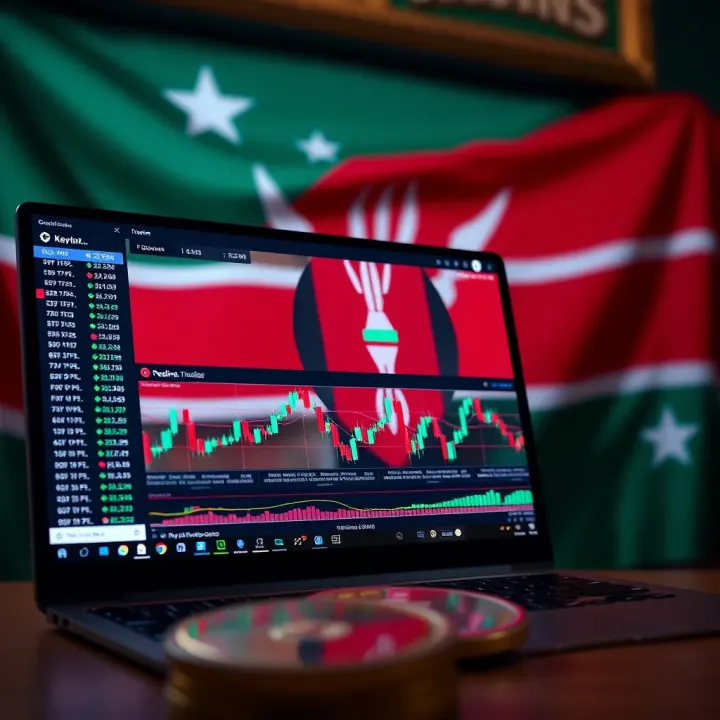
💰 Explore cryptocurrency trading in Kenya with practical tips on strategies, platforms, risks, and legal info to trade confidently in the local market.
Based on 6 reviews