
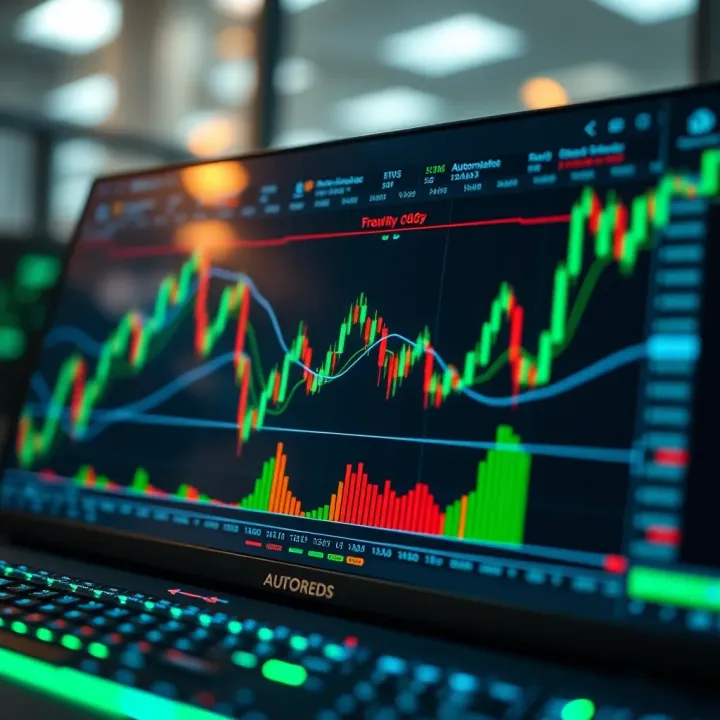
How Bot Trading Works in the Forex Market
🤖 Discover how forex trading bots work, their pros and cons, plus tips for Kenya traders on choosing, managing risks, and blending manual strategies.
Edited By
Henry Davies
Robot forex trading uses computer programs to trade currencies automatically based on specific strategies. These trading robots scan the forex market, analyse data, and place buy or sell orders without human intervention. This means they can operate 24/7, capturing opportunities even when you are asleep or busy.
In Kenya, many traders find these systems attractive because they remove emotional decisions, which often lead to costly mistakes. For instance, a trader might panic and sell too early during market dips. A robot forex trading system sticks to its programmed rules, avoiding such errors.
These robots rely on algorithmic strategies that can range from simple moving average crossovers to more advanced patterns involving multiple indicators. When a set of conditions in the market is met, the robot executes trades automatically, aiming for consistent profits over time.
Automated trading does not guarantee success but provides disciplined execution that’s hard to maintain manually.
Strategy Programming: The user sets or chooses a trading strategy, which could be trend following, scalping, or breakout trading.
Market Scanning: The robot continuously monitors currency pairs for signals based on the programmed strategy.
Trade Execution: When the conditions match, it automatically opens, manages, or closes trades.
Risk Management: Many robots include stop-loss and take-profit settings to limit losses and secure gains.
Market Conditions: Robots perform best in markets matching their strategy. For example, a trend-following robot may struggle in sideways markets.
Broker Compatibility: Choose a broker that supports automated trading and offers low spreads to maximise profits.
Costs: Take note of costs such as subscription fees for the robot, commissions, and spreads.
Backtesting: Always test the strategy with historical data before live trading to understand potential returns and risks.
Kenyan traders can use platforms like MetaTrader 4 or MetaTrader 5, which support Expert Advisors (EAs)—the common forex robots. These tools integrate with popular brokers in Kenya, enabling seamless automated trading.
Understanding how robot forex trading works and its practical implications helps traders decide if automation suits their style and goals. While these systems can enhance trading efficiency, it's important to manage expectations and stay informed about market changes that might affect performance.
Getting a good grasp on robot forex trading is key for anyone aiming to trade forex efficiently. It helps you see how automated tools can reduce emotional decisions and manage trades without breaks. This understanding also highlights how traders can better control risks and maximise profit chances, especially in Kenya’s fast-growing trading scene.
A forex trading robot is software programmed to execute currency trades automatically based on specific algorithms or strategies. These systems analyse market data, make trading decisions, and place orders without requiring manual input once activated. For example, a forex robot might be set up to buy euros against the US dollar when certain technical indicators suggest a favourable trend.
This automation removes the human element, which often brings emotional bias like fear or greed that can derail trading plans. In practical terms, this means traders can rely on their predefined rules being applied consistently.
Trading robots operate by monitoring price movements, technical indicators, and other market variables in real-time. When the software detects conditions matching its programmed criteria, it executes buy or sell orders on behalf of the trader. For instance, if a robot uses moving averages to spot trends, it will open or close positions once those trends align with its strategy.
They interact directly with trading platforms—commonly MetaTrader 4 or 5—which connect to brokers. This allows robots to make fast decisions that human traders may miss, particularly when markets move quickly or outside regular hours.
Fully automated forex robots manage everything from market analysis to trade execution without needing user intervention after setup. They run continuously, tracking numerous currency pairs and managing trades simultaneously. This suits traders who want to remove the manual effort but should be monitored regularly to adjust strategies as needed.
Semi-automated robots, on the other hand, require some level of human input before executing trades. For example, they might signal potential trading opportunities, but the trader decides whether to proceed. This hybrid approach gives traders more control while still benefiting from automation’s speed and efficiency.
Forex robots often use popular strategies like trend following, where trades align with the direction of market movement, or scalping, which involves making quick trades to capture small price changes. Some robots employ breakout strategies, acting when prices cross key support or resistance levels.
These strategies rely heavily on technical indicators such as Moving Average Convergence Divergence (MACD), Relative Strength Index (RSI), or Bollinger Bands. Proper use of these strategies can lead to consistent trading outcomes, but they must be tested and adapted to current market conditions.
Automated trading tools aren't magic bullets—they work best when combined with thoughtful strategy selection and regular oversight.
By understanding these core concepts, traders in Kenya can better evaluate how robot forex trading fits their goals and trading style.
Understanding both the advantages and limitations of forex robots is vital for traders who want to use automated systems wisely. Forex trading robots offer powerful tools that can assist in making quicker decisions and managing trades efficiently. Still, they are not foolproof and require careful handling to avoid losses.
One major advantage of using a forex trading robot is the removal of emotions from the trading process. Human traders often fall prey to fear, greed, or impatience, leading to rash or delayed decisions. A robot sticks exactly to its programmed strategy, avoiding spontaneous reactions to market swings. For instance, when the Kenyan shilling suddenly weakens due to political developments, a human trader might panic and close positions prematurely. In contrast, a robot will follow the plan without hesitation, potentially preserving capital or locking in profits.
Forex markets run around the clock, and human traders cannot physically monitor trades every hour. Automated systems provide continuous market analysis and trade execution, which is especially beneficial for Kenya-based traders who may want to catch market movements during night hours or when busy with daytime activities. This constant trading can help seize opportunities in various currency pairs, including USD/KES or EUR/KES, no matter the time.
Forex robots excel at handling intricate strategies involving multiple indicators or entry and exit points that may overwhelm a human trader if done manually. For example, a robot could apply a combination of moving averages, RSI signals, and volatility filters all at once, executing trades exactly when conditions align. This precision allows for sophisticated techniques like grid trading or scalping, which require rapid reactions and strict discipline.
Despite their efficiency, forex robots rely heavily on software and hardware stability. Issues like internet outages, server crashes, or bugs in the code can cause missed trades or unintended losses. Kenyan traders using forex robots must ensure they have reliable internet and power backup, especially in areas prone to load shedding or network disruptions. Even a short failure during critical market moments can impact results.
Robot systems are often backtested on past data to improve performance, but over-optimising a strategy on historical trends may fail to translate into future success. This is called "curve fitting," where the robot perfectly predicts old market conditions but struggles with live volatility. For instance, a robot tuned for quiet market phases might perform poorly during Kenya's election periods when currency swings unpredictably. Therefore, traders should avoid blindly trusting backtests without ongoing performance monitoring.
Even the best robots cannot foresee sudden, large market events such as geopolitical shocks, central bank rate announcements, or unexpected crises. These events can disrupt trading patterns and trigger significant losses if the robot is not programmed to respond or shut down at such times. Human oversight remains essential to intervene or adjust strategies to minimise damage when markets behave unexpectedly.
While forex robots offer clear advantages like emotion-free trading and 24/7 market presence, they are not a set-and-forget solution. Being aware of their limitations helps Kenyan traders manage risks effectively and make better use of automated systems.
By balancing these benefits and drawbacks, traders can make informed choices about when and how to use forex robots, adapting to their individual risk appetite and market conditions.
Choosing the right forex trading robot is critical in ensuring your automated trading delivers consistent results. A reliable robot helps avoid unexpected losses, technical glitches, and wasted time. Given the varying quality of forex robots on the market, Kenyan traders need to focus on specific features that distinguish trustworthy systems from risky ones.
Transparency means the robot provider openly shares essential data such as historical performance, trading strategies applied, and risks involved. This openness allows traders to assess if the robot’s approach aligns with their goals. For example, a robot that shows verified results from established brokers boosts confidence compared to one with vague claims.
A proven track record means the robot has been tested over a significant period and various market conditions. It’s useful to see consistent performance over months, not just a few profitable weeks. Robots that publish independent third-party verification reports or certifications tend to be more trustworthy.
Forex market behaviour varies, so a robot that offers customisation lets you adjust settings like risk level, trade size, and strategy parameters. This flexibility is vital for adapting to changing market conditions or your personal risk appetite. For instance, some traders prefer aggressive scalping strategies, while others want conservative swing trades — a good robot should let you tailor these.
Without proper customisation, you might rely on a generic strategy that doesn’t fit your style or market environment, leading to poor results. Customisation also helps Kenyan traders consider local factors like trading hours or preferred currency pairs.
The chosen robot should work smoothly with widely used platforms such as MetaTrader 4 (MT4) or MetaTrader 5 (MT5), which are popular in Kenya. Compatibility ensures easy integration, monitoring, and execution of trades without glitches.
For example, a robot customised for MT4 benefits from a huge user base, community support, and reliable broker connections. If you use platforms with limited support, you risk encountering software crashes or execution delays that eat into profits.
Backtesting uses historical data to check how a trading robot would have performed in the past. It’s a handy first step but should not be the only basis for judging a robot’s effectiveness. Backtesting is done in controlled conditions and cannot capture real-time market events like sudden volatility or slippage.
Live trading outcomes, recorded during actual market conditions, give a clearer picture of performance. Kenyan traders should compare both sets of results—discrepancies are common, so an excellent robot must show strong live performance close to its backtest.
Listening to other users’ experiences helps avoid scams or overhyped robots. Check reviews and forums where traders discuss things like reliability, customer support, and ease of use. For instance, if multiple users report frequent shutdowns or poor execution, it's a red flag.
Be cautious of overly positive or generic reviews — look for detailed comments that mention specific features or issues. For Kenyan traders, reviews highlighting compatibility with local brokers or payment systems like M-Pesa add extra value.
Before committing real funds, testing a robot on a demo account replicates live trading without risking money. This allows you to see how the robot behaves with your chosen settings and whether it integrates well with your broker.
Demo testing uncovers bugs, delays, or unexpected trading patterns early on. It’s a safe way to build confidence, especially since forex robots can perform differently across broker platforms due to spread and execution speed variations.
Taking time to pick a reliable forex robot based on these features can save you from costly mistakes and increase your chances of sustained profits in the dynamic forex market.
Forex robots can help Kenyan traders automate their strategies and trade around the clock without emotional bias. However, to get the most from these systems and protect your investments, you need practical measures tailored to Kenya’s market and regulatory environment. This section discusses how to manage automated trading safely and the local context you should consider for effective forex robot use.
Regular monitoring and strategy adjustment are vital despite automation. Even the best forex robots can face challenges like changing market conditions or technical glitches. For example, a strategy working well during the Kenya shilling’s stability might underperform during periods of high volatility or political uncertainty. Checking your robot’s trades daily and calibrating settings based on performance ensures you stay in control. Many Kenyan traders schedule weekly reviews, adjusting parameters or pausing the robot when unexpected market swings occur.
Risk management measures protect your capital from heavy losses, especially when markets turn unfavourable. Set limits on how much your robot can trade or lose within a day to avoid sudden shocks. Using stop-loss rules and reasonable leverage keeps risks manageable. Kenyan traders often combine automated risk settings with manual oversight, so they step in quickly if the robot begins to behave unexpectedly. Without these limits, automated bots may keep trading through losing streaks, draining funds faster than manual trading.
Integration with reliable brokers supporting M-Pesa payments is crucial for seamless funding and withdrawals. Since M-Pesa dominates payments in Kenya, linking your forex robot to a broker that accepts M-Pesa reduces delays and transaction costs. Reputable brokers like HotForex and FXTM operate in Kenya and facilitate smooth deposits and withdrawals via M-Pesa, empowering traders to fund their accounts instantly from mobile wallets. Ensuring your robot’s platform can connect easily with these brokers makes your trading process less stressful and more efficient.
Regarding KRA and tax implications for forex profits, Kenya Revenue Authority does tax income from forex trading. Traders must keep accurate records of their gains and losses for tax declarations. Failure to report forex profits can lead to penalties. Typically, profits from trading count as business income and attract 30% corporate tax or personal income tax if trading individually. Familiarity with KRA’s requirements helps avoid unexpected fines and keeps your trading compliant.
The Capital Markets Authority (CMA) Kenya provides guidance on forex trading, especially around licensed forex brokers and investor protection. Trading with CMA-regulated brokers adds a layer of trust since these firms meet certain operational standards. The CMA also educates traders on recognising scams, which remain common in forex trading. Checking a broker’s licence on CMA’s platform before using a forex robot is standard practice among Kenyan traders serious about their capital.
Access to forex markets and payment methods continues to improve in Kenya. Mobile money payment options like M-Pesa have opened doors for many who previously had challenges funding forex accounts. Besides M-Pesa, banks such as Equity and KCB offer online transfers that also support forex trading deposits. Understanding each payment method’s speed, fee structure, and security safeguards helps traders choose what works best for their situation. Availability of diverse payment channels reduces barriers and helps Kenyan traders fully utilise forex robots without financial hassles.
Running a forex robot in Kenya needs more than just good software. Combining careful monitoring, smart risk controls, and using trusted, locally connected brokers makes automated trading safer and more effective.
By following these practical tips, Kenyan traders can make sure their use of forex robots matches the realities of local markets, regulations, and payment systems—maximising automated forex trading’s potential while managing risks responsibly.
🤖 Discover how forex trading bots work, their pros and cons, plus tips for Kenya traders on choosing, managing risks, and blending manual strategies.
Interested in forex trading? Learn how currency exchange works, key strategies, risks, and tips tailored for Kenyan investors to trade smartly 💱📈.
📱 Ready to trade forex on your mobile? Learn how to pick the right app, open an account, and use safe strategies to succeed in Kenya’s forex market. 💹💡
Explore forex trading basics in Kenya 🇰🇪, learn top currency pairs, strategies, risks, and Kenya-specific tips on regulators and payment options like M-Pesa. 💹
Based on 12 reviews