
Forex Trading Guide for Kenyan Investors
Explore forex trading basics in Kenya 🇰🇪, learn top currency pairs, strategies, risks, and Kenya-specific tips on regulators and payment options like M-Pesa. 💹
Edited By
Emma Lawson
Automated trading, powered by trading robots, is no longer a foreign concept for many investors in Kenya and beyond. These systems, often called automated trading systems or expert advisors, use computer programmes to execute trades on financial markets without the need for constant human input. The primary goal is to reduce emotional decision-making and speed up trade execution.
In simple terms, a trading robot analyses market data using a predefined set of rules or algorithms. Once conditions match the strategy, it executes buy or sell orders automatically. For example, a robot might be programmed to buy shares of a stock listed on the Nairobi Securities Exchange (NSE) when its moving average crosses a certain threshold.
Trading robots can operate continuously, monitoring price movements 24/7—which is quite handy given how fast market conditions can change.
These systems come with clear advantages: they reduce emotional trading errors, improve speed of execution, and allow backtesting of strategies using historical market data. However, they are not foolproof and carry risks such as system errors, over-optimisation, and reliance on data quality.
The Kenyan financial market is gradually embracing these technologies. With the growing sophistication of investors and traders, plus the rise of online trading platforms that support algorithmic trading, more people are exploring how to integrate bots for smarter investment decisions.
Key features of trading robots include:
Rule-based decisions: They follow pre-programmed strategies consistently.
Speed and efficiency: Robots place orders faster than any manual trader.
Automation of repetitive tasks: Freeing traders from constant supervision.
Backtesting abilities: Testing strategies on past data before live application.
Understanding how trading robots work and their potential impact is essential for any trader or investor aiming to keep pace with modern trading. This article offers straightforward insights to help you decide if and how automated trading fits into your financial activities.
Understanding what trading robots are and how they operate is essential for traders and investors aiming to navigate modern financial markets more efficiently. Trading robots, also known as automated trading systems or expert advisors, perform trade executions without continuous human input. This automation streamlines trading processes and can respond to market movements quicker than manual intervention.
Trading robots carry out trade execution automatically based on pre-set rules and algorithms. For example, a stock trader in Nairobi using a robot can set criteria like buying shares when prices fall below a certain point or selling once a target price is hit. The robot monitors the market 24/7 and triggers trades instantly, eliminating delays that humans might face due to distractions or slow reaction times.
Automated execution helps investors capitalise on fleeting opportunities, especially in fast-moving markets like Forex or commodities. It reduces manual workload, allowing traders to focus on strategy development while the robot handles routine order placement reliably.
Human traders often struggle with emotions such as fear and greed, which can cloud judgment and lead to poor decisions like holding onto losing positions or exiting winning trades too soon. Trading robots remove emotional bias by sticking strictly to programmed rules.
In practice, this means a robot won't panic-sell during brief market dips or get overly confident during rallies. For instance, an algorithm programmed to sell shares once they hit a 5% drop won't hesitate, even if the market sentiment is shaky. This disciplined approach helps preserve capital and maintain consistent trading performance over time.
At the heart of trading robots are algorithms—step-by-step instructions that define when to buy or sell based on market data. These rule-based systems can be as simple as moving average crossovers or complex strategies incorporating multiple indicators like RSI and Bollinger Bands.
For Kenyan traders, algorithms can be tailored for local market nuances, such as specific NSE stock behaviours or currency pairs like USD/KES. This programmability offers flexibility, letting traders customise robots to fit their risk appetite and trading goals.
Trading robots rely heavily on analysing real-time and historical data to make informed decisions. They scan price movements, volume, trends, and other market signals to assess whether conditions meet their trade criteria.
Unlike human traders, robots can process vast amounts of data quickly and simultaneously, reducing the chance of missing critical signals. For example, a robot might identify a sudden spike in Safaricom shares alongside weakening volume on a competitor to decide on a timely trade. This analytical edge is vital in markets where prices can shift within seconds.
Automating trade execution and decision-making through algorithms allows trading robots to operate with precision and consistency, making them valuable tools for both novice and experienced investors in Kenya and beyond.
By grasping the mechanics and components behind trading robots, traders can better appreciate their potential and limitations, tailoring their use for smarter market engagement.
In the world of automated trading, the choice of strategy determines how a trading robot performs under different market conditions. Understanding the common strategies that these robots follow helps traders make informed decisions on which systems suit their risk appetite and investment goals. These strategies rely heavily on market data, technical indicators, and price patterns to execute trades without human emotion interfering.
Trend following is one of the most straightforward approaches where the trading robot identifies an established price direction and opens positions in line with that trend. For example, if the price of a stock listed on the Nairobi Securities Exchange (NSE) is steadily rising, a robot using this strategy will enter a buy trade to ride the momentum. The key is recognising that prices tend to continue moving in the same direction for some time before reversing.
Momentum strategies go a step further by measuring the strength or velocity of the price movement. Robots might use indicators like the Relative Strength Index (RSI) or Moving Average Convergence Divergence (MACD) to assess momentum. In cases where momentum is strong, the trading robot can increase trade size or hold positions longer to capture bigger gains. This approach suits markets showing clear directional moves, such as during earnings announcements or macroeconomic releases.
Mean reversion strategies assume that prices will eventually return to their average or fair value after moving too far in one direction. Trading robots applying this method look for price spikes or drops and trade expecting a pullback. For instance, if a currency pair like USD/KES on a forex platform surges sharply, the robot may short the pair anticipating a correction. This strategy works best in stable markets with range-bound movements rather than trending ones.
Arbitrage involves exploiting price differences for the same asset across different markets or platforms. While fully automatic arbitrage can be tricky due to latency, some robots still profit by buying cheaply in one venue and selling higher elsewhere almost simultaneously. For example, if the price of Safaricom shares differs slightly between two trading platforms, the robot can act quickly before the prices equalise. Although such opportunities are rare and brief, well-designed algorithms can generate steady profits over time.
Scalping strategies focus on making many small trades throughout the day, profiting from minor price changes. Trading robots using scalping constantly monitor markets and execute numerous buy and sell orders in quick succession. In Kenya's equities or forex markets, a scalping robot might open and close trades within minutes—or even seconds—to capitalise on short-term fluctuations caused by order imbalances or news.
High-frequency trading (HFT) takes scalping to an extreme by executing thousands of orders at lightning speed, using powerful computers colocated near exchange servers to minimise delay. While HFT mainly belongs to institutional investors worldwide, some Kenyan brokers offer platforms that support fast execution beneficial for algorithmic scalping. However, normal retail traders may find HFT challenging due to the high costs of infrastructure and competitive environment.
Automated trading robots apply these strategies to remove hesitation and emotional bias, ensuring timely and disciplined execution. When used wisely, they complement human decision-making by amplifying opportunities that might otherwise be missed.
In summary, recognising the different automated strategies helps you understand how trading robots operate and what to expect from them. Whether it is riding a trend, capitalising on price reversions, or making rapid-fire trades, each approach has its merits and limitations, especially in Kenya's evolving financial markets.
Trading robots are gaining traction in Kenya thanks to their ability to improve speed, reduce emotional trading, and provide round-the-clock market monitoring. These advantages make them practical tools for both new and experienced traders navigating the country's increasingly active financial markets.
One main benefit of trading robots is their speed. They execute trades in milliseconds based on real-time data, far quicker than any human can manage. For instance, when the Nairobi Securities Exchange (NSE) releases important financial results or economic indicators come out, robots can automatically adjust positions without delay. This rapid response helps Kenyan traders capitalise on short-lived price movements before they vanish.
In addition, trading robots manage multiple markets simultaneously—from NSE equities to FX pairs involving the Kenyan shilling, like USD/KES—something that's very hard for a person to do manually. The constant availability and efficiency save time and reduce the risk of missing opportunities during busy market hours.
Human emotions, such as fear or greed, often distort trading decisions leading to losses. Robots remove this emotional factor by strictly following programmed rules. For example, during times of political tension or election season in Kenya, market volatility spikes and traders may panic-sell or hold on too long hoping for a bounce. A trading robot remains steady, executing trades based on clear signals and risk parameters.
This detachment prevents impulsive moves like chasing trends blindly or exiting early due to anxiety, which are common among retail traders. In practice, this discipline can substantially protect a trader’s capital while maintaining consistent trade execution.
Kenya’s financial market doesn’t operate round-the-clock, but international markets do affect it indirectly. Trading robots can monitor global markets such as the New York Stock Exchange or European forex markets even when the NSE is closed. This feature allows Kenyan traders to react to overnight developments without waiting for the local market to open.
Besides international events, local market news and economic data—like Central Bank of Kenya policy decisions—can trigger significant price moves. Robots keep watch constantly, ready to act on these signals immediately. This 24/7 vigilance helps traders avoid missing crucial trades, which manual monitoring, especially for those with day jobs, often makes difficult.
The Kenyan trading scene suits automation well. Trading robots offer a timely edge by combining speed, emotional detachment, and market awareness that support smarter, more effective trading.
In summary, trading robots bring practical benefits to Kenyan traders by enhancing execution speed, eliminating emotional mistakes, and providing nonstop market coverage. These strengths make them valuable in a market environment increasingly linked to global movements and local nuances alike.
Using trading robots can offer speed and efficiency, but it’s critical to understand the risks and challenges involved. These automated systems are not foolproof—they depend heavily on technology, market conditions, and regulatory frameworks which sometimes can introduce vulnerabilities or unexpected behaviours. Let’s look at some key challenges traders face.
Trading robots rely on software and hardware working seamlessly together. However, technical faults such as bugs, hardware malfunctions, or network interruptions can cause errors in trade execution. For example, a glitch in the algorithm might trigger a string of wrong orders, leading to significant losses. In Kenya, where internet connectivity varies and power outages are not uncommon, such technical failures can be more frequent and disruptive.
It’s crucial for traders to have backup plans like manual intervention capabilities or alerts when the robot behaves abnormally. Regular software updates and testing can help reduce risks, but complete elimination of system failures remains difficult.
Markets can switch quickly due to unexpected news, political events, or economic shifts. Trading robots typically work based on historical data and predefined rules, which may not adapt well to sudden market swings. During the 2020 COVID-19 crisis, many automated trading systems registered massive losses worldwide as markets behaved erratically.
For Kenyan traders, volatility during periods like election seasons or changes in Central Bank of Kenya (CBK) policies may challenge robot algorithms that were not designed to handle such shocks. This underscores the need to continuously monitor robot performance and consider blending automated trades with human oversight.
Traders in Kenya must ensure their automated systems comply with rules set by the Capital Markets Authority (CMA). The CMA regulates activities in stock trading, derivatives, and other capital market instruments to protect investors and maintain market fairness.
This means trading robots used on Kenyan platforms need to operate within these legal frameworks—that includes adhering to disclosure requirements, avoiding market manipulation, and using licensed brokers. Failure to comply may result in fines or suspension of trading privileges. It’s wise to check if your trading system provider aligns with CMA regulations before deployment.
Automated trading involves processing vast amounts of financial data, making systems a target for cyber threats. Kenyan traders must be cautious about data privacy, especially with the growing number of cyberattacks on financial institutions.
Secure data handling, use of encrypted connections, and robust cybersecurity measures are essential to protect user information and prevent unauthorised trades. Additionally, Kenyan data protection laws require clear consent and secure management of personal data, adding another layer of responsibility for trading robot operators. Awareness and investment in security fail-safes can significantly reduce the risk of costly breaches.
While trading robots can boost efficiency, understanding their limitations and associated risks helps traders avoid sudden shocks and costly mistakes. Regular monitoring, legal compliance, and security vigilance are as important as the technology itself in successful automated trading.
Choosing the right trading robot and using it properly can make a big difference in your trading outcomes. These automated systems vary greatly in performance, reliability, and suitability depending on market conditions, including the specifics of the Kenyan financial environment. Understanding how to evaluate these robots and blend them with your manual trading strategies helps safeguard investments and improve returns.
The first step is to review a robot's performance history using verified data. Look for consistent returns over multiple market cycles rather than short-term spikes. For example, a trading robot that showed strong profits during the last volatile year but consistently failed during stable periods may not be reliable. Backtesting results combined with live trading records offer useful insights. Also, consider the robot's responsiveness to news that affects markets, such as changes in Central Bank of Kenya policy or Nairobi Securities Exchange updates.
You want a system that reports clear metrics: drawdown levels, win/loss ratio, and average trade duration are crucial. Avoid robots with vague or incomplete data. Reliability is equally about technical stability; a robot should run on dependable platforms and not have frequent system errors, which could expose your capital to risk.
Don't expect a trading robot to make you rich overnight. Automated trading tools can add value, but they come with risks, especially in volatile markets like Kenya's stock or forex arenas. Setting realistic goals based on your investment size and risk tolerance is key.
Effective risk management means defining clear stop-loss levels and limiting exposure. For instance, you might configure the robot to trade only a small portion of your total capital or suspend trading during major political events that cause local market upheavals. Remember, no robot can perfectly predict sudden shocks or panics.
Successful use of trading robots depends on disciplined risk controls alongside realistic profit expectations.
Relying solely on automation isn't advisable. Combine the strengths of trading robots with your manual analysis and experience. For instance, you can let the robot handle high-frequency trades or execute set strategies while you intervene during unusual market trends or news events.
This hybrid approach helps you stay flexible. Manual oversight also enables you to tweak or halt the robot’s activity promptly when market conditions shift unexpectedly. Many Kenyan traders find this mix effective, especially when monitoring developments like KRA tax changes or county government policies that impact particular sectors.
Using alerts and notifications helps keep you informed without the need to watch markets constantly. This way, technology and human judgment work together, giving you better control and confidence in your trading decisions.
Choosing and using trading robots wisely involves careful performance review, setting sensible risk limits, and blending automation with hands-on strategy. When done well, these systems can be a strong asset for Kenya’s growing pool of investors and traders.
Explore forex trading basics in Kenya 🇰🇪, learn top currency pairs, strategies, risks, and Kenya-specific tips on regulators and payment options like M-Pesa. 💹
Discover how forex robots automate trading in the forex market 🤖 Learn their benefits, risks, and how Kenyan traders can pick and use them wisely for better results.
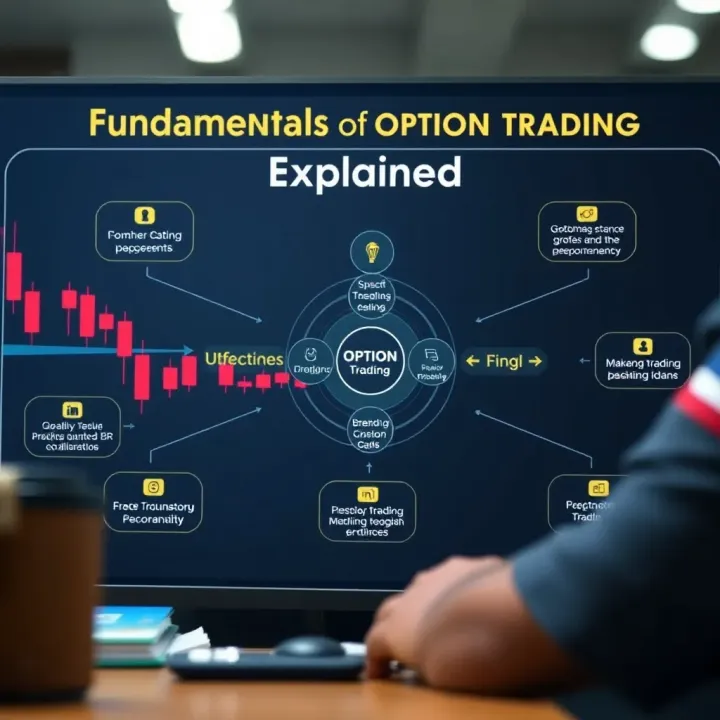
📈 Learn how option trading works, explore types, strategies, and risks perfect for Kenyan investors aiming to hedge or boost profits in our stock market.
Discover how Maven Trading works and its benefits for Kenyan investors 🇰🇪. Learn to start trading easily, manage risks, and grow your portfolio wisely 📈💼.
Based on 13 reviews