

Understanding Demo Trading Accounts for Kenyan Traders
📈 New to trading in Kenya? Learn how demo accounts let you trade risk-free with virtual money, master platforms, and confidently switch to real funds.
Edited By
Ethan Collins
Option trading is quickly gaining attention in Kenya as an alternative way to profit from the stock market beyond simply buying and selling shares. Instead of owning the actual stock, options give you the right to buy or sell shares at a preset price within a specific time frame. This can open the door to both protecting your investments and seeking extra earnings.
Unlike straightforward stock trading, options provide flexibility. For example, if you own shares in Safaricom and worry about a price drop, buying a "put option" allows you to sell your shares later at today’s price even if the market falls. This is a way of hedging against losses. Alternatively, you can buy a "call option" when you expect a stock like KCB Bank to rise, giving you the chance to buy shares cheap before prices go up.
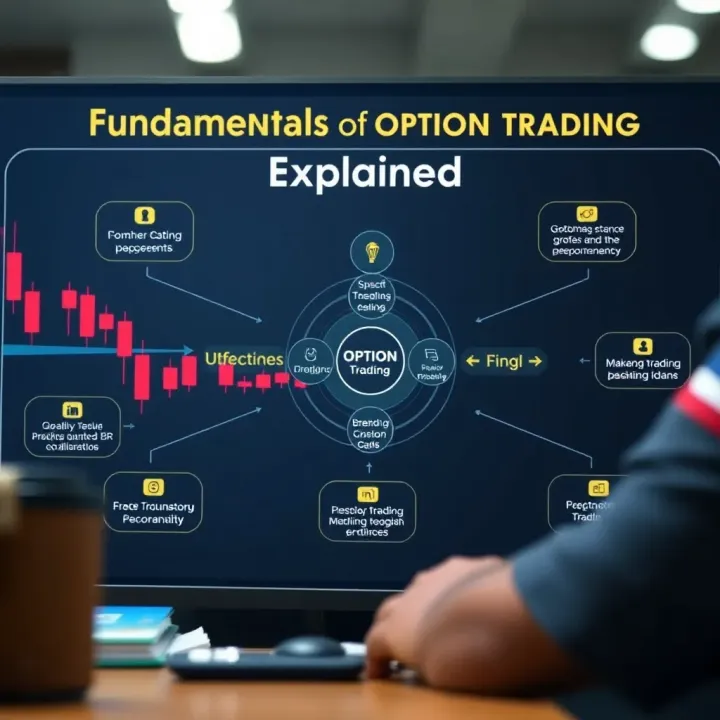
Options are contracts, not ownership; they grant rights to buy or sell underlying shares but don’t mean you own the shares outright.
Getting started with option trading requires understanding a few basic types:
Call Options: Rights to buy a stock at a fixed price within a set time
Put Options: Rights to sell a stock at a fixed price within a set time
Each trade involves premiums (the cost to buy an option) and expiry dates, after which the option loses value. Kenyan investors need to weigh these costs carefully against potential gains.
Option trading isn't just for big players on the Nairobi Securities Exchange (NSE); increasingly, retail investors explore this to diversify their portfolios. However, the risk is significant as options can expire worthless if the market doesn’t move as expected, leading to a total loss of the premium paid.
Understanding these basics helps Kenyan traders decide when option strategies suit their investment goals, whether for hedging or tapping into market movements with limited upfront capital. The following sections dive deeper into how options work, common strategies, and practical tips for local investors.
Understanding what options are and how they function is fundamental for any Kenyan investor looking to diversify beyond traditional shares. Options provide a way to manage risk or speculate without the need to own the underlying asset outright. In this article, we break down options to help you get a clear grip on their mechanics and practical uses.
Call and put options are the two main types of options contracts. A call option gives the buyer the right, but not the obligation, to purchase an asset at a fixed price within a specified period. For example, if you expect Safaricom shares to rise, buying a call option lets you lock in today’s price and buy later if the market moves in your favour. On the flip side, a put option gives you the right to sell the asset at a set price before expiry. This is useful if you suspect prices might fall — it acts like insurance against a drop.
The strike price is where you agree to buy or sell the underlying asset when exercising the option. Suppose you have a call option for KCB shares with a strike price of KSh 40. You can buy those shares at KSh 40 anytime before the option expires, even if the market price is higher. Speaking of expiry, the expiry date is the deadline for exercising the option. After this date, the option ceases to exist. For Kenyan investors, keeping an eye on expiry is crucial since an option going worthless means losing the premium paid.
The premium is the price you pay upfront to buy the option. Think of it as a booking fee for securing your right to buy or sell asset later. For instance, if the premium for Safaricom call options is KSh 5 per share, you pay this price regardless of whether you ultimately exercise the option. The intrinsic value measures how much an option is "in the money" — basically, the difference between the current share price and the strike price, if favourable. An option with no intrinsic value is considered "out of the money" and may only have time or speculative value left.
Options differ from stocks in several key ways. Owning a stock means you have part-ownership of the company and potentially receive dividends. Options, however, are contracts that give rights without ownership. Plus, options have expiry dates, while stocks can be held indefinitely. Due to leverage embedded in options, you can control a large number of shares with less capital, but at the risk of losing the entire premium if trades don’t go well. This makes options more suitable for investors ready to actively manage positions and understand market movements.
For Kenyan investors, options can offer flexible strategies—whether to hedge against price drops, speculate on market direction, or generate income—but require keen attention to terms like premium, strike price, and expiry.
Understanding these basics sets a solid foundation before moving on to types of options and trading strategies suited for our local market.
Understanding the different types of options and how they are used is vital for Kenyan investors. Options come with unique characteristics and serve multiple purposes in the market. This knowledge helps you tailor your strategies to fit your investment goals, whether you're hedging risks, speculating, or earning additional income.
American options let you exercise the contract any time before the expiry date. This flexibility is especially useful in volatile markets, as you can react quickly to price changes. For example, if you hold an American call option on Safaricom shares and the stock price suddenly rises, you may choose to exercise your option immediately to lock in a profit.
European options, on the other hand, can only be exercised on the expiry date itself. While less flexible, these options often carry lower premiums. They suit investors who have a longer-term view and want to plan their moves precisely, such as locking in a price for a maize futures contract until harvest season.
Many exchanges in Kenya and internationally predominantly trade American options, but knowing the difference helps you choose the right option type for your needs.
Hedging is like an insurance cover for your investments. Kenyan investors often use options to protect their portfolios from unexpected market drops. For example, if you own shares in a company listed on the Nairobi Securities Exchange (NSE), you could buy put options to safeguard against price falls. If the shares drop below a certain price, the put option gains value, offsetting losses on your stocks.
This strategy is practical during uncertain times, such as election periods or when global events might disrupt local markets. It helps investors sleep better at night, knowing they have a safety net.

Some investors use options purely to profit from price changes without owning the underlying stock. For instance, if you expect KCB Group’s share price to rise but cannot afford to buy many shares, buying call options is a cheaper way to gain exposure. If the price goes up beyond the strike price plus premium, you make a profit.
Speculation carries risks, too. The option premium might be lost if the stock doesn’t move as predicted before expiry. Still, it offers an affordable route for active traders wanting to capitalize on market movements.
Selling options can provide steady income, especially if you hold shares already. For example, if you own shares in East African Breweries Limited (EABL), you can sell call options on those shares. This is called writing covered calls. You collect a premium from selling the option, and if the shares remain below the strike price, you keep the premium as income.
This strategy suits investors who want extra earnings besides dividends but are willing to sell their shares if prices rise past the strike price. It’s a way to monetise shares while managing portfolio decisions actively.
In all cases, it’s smart to understand option terms, timelines, and market factors to use these tools effectively and avoid unnecessary risks.
Trading options in Kenya can open new ways to diversify your investment portfolio and manage risk, but starting requires understanding the local market specifics alongside general trading practices. This section explains how to launch your options trading journey, focusing on brokerage selection, account setup, and navigating trading platforms—all tailored for Kenyan investors.
When picking a brokerage, you want one that’s trustworthy, offers good customer support, and provides access to option trading features suited for your goals. Look for brokerages with transparent fees, user-friendly platforms, and a clear regulatory framework. Since not all Kenyan brokers offer options trading, it’s wise to check if the brokerage allows trading in regional and international equities with options, such as those listed on the Nairobi Securities Exchange (NSE) and global markets via platforms like Interactive Brokers or IG.
Also consider the ease of deposits and withdrawals. Brokerages supporting M-Pesa for funding accounts save you the headache of bank transfers or forex issues. Access to educational resources and market analysis is another plus to keep you sharp on options strategies.
Among brokerages accessible to Kenyans, some international ones like Interactive Brokers and Saxo Bank provide robust options trading services with a range of tools. Local brokers, such as Dyer & Blair or Faida Investment Bank, typically offer access to NSE stocks but may have limited or emerging options trading services.
For beginners, platforms with strong mobile apps and local payment options often work best since you can trade from anywhere in Nairobi or beyond. Pick a brokerage with a solid presence in Kenya or East Africa to ensure quicker support and smoother transactions.
To trade options in Kenya, you must have a valid Kenya Revenue Authority (KRA) Personal Identification Number (PIN). This is crucial for tax purposes and compliance. Most brokers will require you to submit your KRA PIN alongside identity documents such as a national ID or passport to complete the Know Your Customer (KYC) process.
The KYC process ensures your identity is verified, helping brokers comply with local anti-money laundering laws. It’s straightforward but necessary to avoid delays in account activation.
Depending on your broker, the minimum deposit to open an options trading account varies but expect to start at around KSh 20,000 to KSh 50,000. If you plan to trade with leverage, you’ll need to set up a margin account, which usually demands higher deposits and carries specific risk disclosures.
Margin accounts let you borrow funds to increase your position size but also mean losses can be larger than your initial deposit. Make sure you fully understand margin calls and the broker’s policies before using leverage.
Options trading requires different order types compared to regular stock trading. Limit orders, stop-loss orders, and one-cancels-the-other (OCO) orders are common. Using limit orders can help you enter or exit positions at precise prices, which is important given option premiums’ volatility.
Some platforms also support complex orders like spreads and combinations, letting you implement advanced strategies directly. Kenyan investors should choose platforms that clearly display these options order types and provide tutorials or guides on how to use them effectively.
Monitoring options demands more attention since their value can change rapidly due to factors like the underlying asset price, volatility, and time decay. Make use of tools that display Greeks (Delta, Gamma, Theta, etc.) and real-time pricing.
Many trading platforms offer dashboards where you can see your open option positions, profit and loss, and alerts for significant price moves or expiry dates. Staying informed helps you manage your trades without missing critical moments in the fast-paced options market.
Getting started with option trading in Kenya takes some upfront homework, but by choosing the right broker, completing regulatory steps, and using proper tools, you set yourself up for smarter investing and clearer risk control.
Option trading, while offering exciting opportunities, involves risks that every Kenyan investor needs to understand clearly. Unlike traditional stock buying, options can expose you to significant losses quickly, especially because of their leveraged nature. Being aware of these risks helps you avoid costly mistakes and develop a strategy suitable for your financial goals and risk tolerance.
One key challenge with options is how leverage affects your potential losses. For instance, buying a call option might seem cheaper than buying the actual stock, but if the stock doesn’t move as expected before the option expiry, you risk losing the entire premium paid. The losses here can sometimes be more severe than with stocks because options expire, unlike shares which you can hold indefinitely.
Leverage means you control a bigger position with less capital, but it cuts both ways. Say you buy options worth KS0,000 to control shares worth KS00,000. If the market turns against you, your loss could wipe out that KS0,000 quickly, whereas owning the shares might only see a smaller drop over time. This makes it crucial to manage exposure and avoid risking more than you can afford.
A common pitfall is jumping into many option trades without a clear plan. Investors might get tempted to trade frequently, chasing quick profits like in the bustling Nairobi matatu stage, but this often leads to steep losses due to transaction costs and emotional decisions. Without a solid strategy, you risk burning capital fast. Instead, focus on defined goals and limit how much of your portfolio you allocate to options.
Options have fixed lifespans. Ignoring or misunderstanding your option's expiry date can cost you dearly. For example, holding a put option expecting a market downturn but not acting before expiry means the contract can become worthless if the stock price stays above the strike price. Unlike shares, you lose the option value completely. It’s vital to track expiry dates closely and plan exits well in advance.
Option pricing includes several factors beyond just the underlying stock’s price—like time value and implied volatility. Misinterpreting these can mislead you about an option’s true worth. For example, a stock might be stable but if volatility spikes, option premiums rise. Kenyan traders unfamiliar with these concepts might overpay or sell prematurely, missing out on potential gains. Learning how these factors influence prices helps you make smarter buying and selling decisions.
Using stop-loss orders can help limit your losses. These are instructions to sell your option if its price falls below a certain point. For instance, if you buy a call option on Safaricom shares at KS0, and you set a stop-loss at KS0, the system automatically exits the position if the price drops to KS0, protecting you from further losses. This tool is especially helpful to avoid emotional trading when markets move sharply.
Options should be part of a balanced portfolio, not your entire investment. Combining them with traditional shares or fixed-income assets helps reduce overall risk. For example, if you hold blue-chip stocks from NSE-listed companies and use options selectively for hedging or speculation, you soften the blow if an options trade fails. This balance protects your savings and maintains steady growth while you experiment with options.
Successful option trading in Kenya demands respect for risks and careful management. Knowing your limits and sticking to a plan is key to avoiding the pitfalls that many new traders face.
Understanding these risks ensures you approach option trading not as a quick riches scheme but as a calculated part of your broader investment strategy. Take your time, learn the market, and invest responsibly.
Option trading offers different ways to manage risk and make profits. Understanding basic strategies is crucial for Kenyan investors to use options wisely. These approaches help you balance risk and return while aligning your investments with market conditions and personal goals. Whether you are starting or already involved in option trading, knowing these strategies lets you make better decisions.
Buying call options means you expect the asset’s price to rise. You pay a premium upfront to buy the right (but not obligation) to purchase the underlying stock at a certain price, called the strike price, before the option expires. This approach suits investors who anticipate market rallies but want to limit losses to the premium paid. For example, if you expect Safaricom shares to rise due to positive earnings, buying a call gives you exposure without paying the full share price.
On the other hand, buying put options protects you from price drops. It gives the right to sell the stock at the strike price, useful if you think prices will fall. For example, if you hold shares in a bank and worry about sector downturns, purchasing puts can act as insurance by locking in a minimum selling price.
Covered calls involve selling call options against assets you already own. You collect premiums as income while agreeing to sell your shares at the strike price if called upon. This strategy fits Kenyan investors aiming to generate more income from holdings like equities in companies listed on the Nairobi Securities Exchange (NSE).
Protective puts work as a safety net. When you own shares, buying put options limits losses if prices fall sharply. Suppose you have shares in an East African brewing company; a protective put limits risk during unpredictable market swings, such as political events or currency fluctuations.
Vertical spreads involve buying and selling call or put options with different strike prices but the same expiry date. This strategy helps to lower the cost of option positions and limit risk. For instance, a bull call spread is useful if you expect mild price increases. You buy a call at a lower strike price and sell another at a higher strike price, reducing the premium paid.
Vertical spreads suit Kenyan traders dealing with stocks whose price movements aren’t expected to be extreme. They offer a balanced approach: less risk than outright buying calls or puts but still potential for decent returns.
Straddles and strangles are volatility plays. A straddle means buying a call and a put at the same strike price and expiry, betting that the stock will move sharply either up or down. This can be handy if you expect a big announcement from a company but aren’t sure of the direction.
Strangles are similar but use different strike prices for the call and put, usually cheaper than straddles but requiring larger price swings to profit. For Kenyan investors following corporate earnings or election results, these strategies help capture significant price moves while protecting from smaller fluctuations.
Understanding these strategies helps you align option trading with your risk appetite and market outlook. Kenyan investors should practise these techniques on paper before committing actual funds, as option trading can turn quickly if market moves don’t go your way.
Each strategy serves specific goals—from income generation, hedging risk, to speculating on price moves. Choose carefully based on your knowledge, investment size, and market expectations.
📈 New to trading in Kenya? Learn how demo accounts let you trade risk-free with virtual money, master platforms, and confidently switch to real funds.
Explore derivative trading in Kenya 📈 Learn types, risks, rewards & how to use these tools for smart investing, hedging, and managing portfolios wisely.

📈 Discover how Kenyan investors can benefit from copy trading! Learn to follow top traders, understand risks, and pick the right platforms easily.
📈 Explore CFD trading basics for Kenyan traders, learn strategies, understand risks, and navigate local regulations to trade smartly.
Based on 5 reviews