

AUD/USD Exchange Rate Outlook and Trends
📉 Explore in-depth analysis of AUD/USD trends, key economic factors, and market forces shaping currency moves for savvy traders and investors in Kenya.
Edited By
Clara Mitchell
Understanding the euro to Kenyan shilling (EUR/KSh) exchange rate is vital for traders, investors, and businesses operating between Europe and Kenya. The rate fluctuates daily, influenced by a combination of economic performance, market dynamics, and geopolitical events. These movements affect import costs, export competitiveness, investment returns, and overall financial planning.
The EUR/KSh rate depends largely on economic indicators from both the European Union and Kenya. For example, Kenya’s inflation rate, monetary policy decisions by the Central Bank of Kenya (CBK), and GDP growth rates directly sway the shilling’s strength. Meanwhile, interest rate changes by the European Central Bank (ECB) or political developments in eurozone countries also impact the euro’s value.
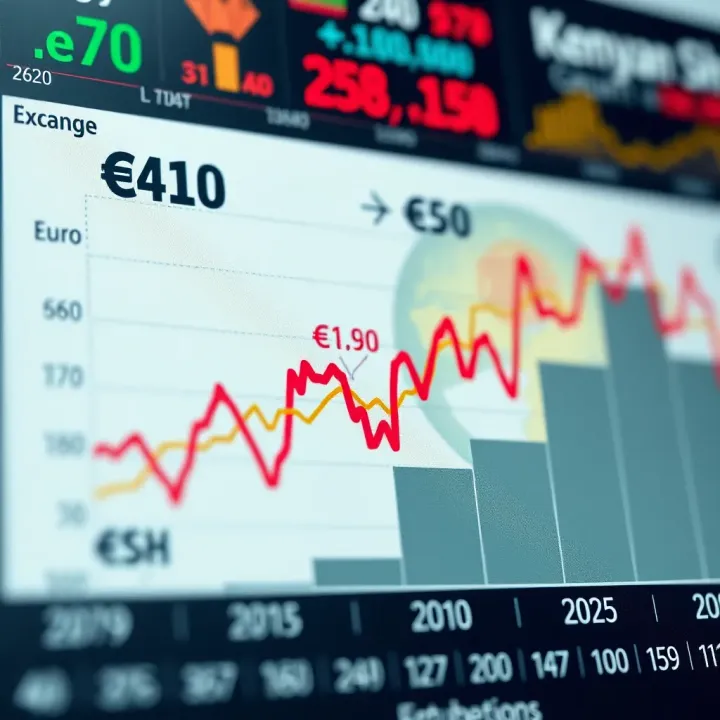
Market sentiment plays a key role too. When global investors deem the eurozone stable, demand for the euro rises, strengthening it against the shilling. Conversely, uncertainty such as Brexit complications or Eurozone debt crises can weaken the euro, causing the EUR/KSh rate to drop. Kenyan-specific factors like election cycles, foreign direct investment flows, or fluctuations in export commodities (tea, coffee, flowers) also add layers of complexity.
Exchange rate forecasts involve analysing a mix of economic data and market trends but are never guaranteed. Still, understanding these factors can provide traders and investors with useful insight to guide decisions.
To follow these trends effectively:
Monitor CBK statements and monetary policy changes
Track EU economic reports and ECB announcements
Watch for local political stability and trade volumes
Observe global events influencing risk appetite, such as geopolitical tensions or pandemics
By staying informed about these elements, Kenyan businesses and financial professionals can better navigate currency risks, optimise import-export pricing, and plan investments with more confidence. This article will explore these factors in depth to help you anticipate shifts in the EUR/KSh rate and make smarter financial moves.
Grasping how the euro trades against the Kenyan shilling matters a lot, especially for traders and businesses involved in imports or exports with Europe. Knowing what drives this currency pair helps you anticipate price swings, plan financial moves, and manage risks more effectively. For example, a Kenyan exporter receiving payments in euros needs to decide when to convert to shillings to avoid losing value if the euro weakens.
Supply and demand dynamics largely shape the EUR/KSh exchange rate. If more businesses or individuals want euros—for travel, buying goods, or investing in Europe—the demand pushes the euro higher against the shilling. Conversely, if Kenya exports more to the eurozone, then euros flow into Kenya, increasing supply and potentially lowering the euro’s value relative to the shilling. This back-and-forth creates daily fluctuations. For instance, before European holiday seasons, demand for euros may spike due to travel, affecting rates.
The European Central Bank (ECB) and the Central Bank of Kenya (CBK) influence EUR/KSh through monetary policies like setting interest rates or intervening in currency markets. If the ECB raises rates, the euro often appreciates because higher returns attract investors. On the other hand, if CBK tightens policy or uses foreign exchange reserves to stabilise the shilling, that can support the KSh value against the euro. Traders watch these policy moves closely since they signal the relative strength of each currency.
Kenya’s trade balance with eurozone countries also sways the EUR/KSh rate. A trade deficit—where Kenya imports more from Europe than it exports—means more demand for euros to pay suppliers, pushing the euro up. Similarly, remittances from Kenyans working in Europe bring euros into the country, increasing supply and cushioning the shilling’s value. For example, during Christmas and Easter, remittances often rise, providing extra euros that can ease pressures on the exchange rate.
Trends over the past five years show some gradual strengthening of the euro relative to the shilling, interrupted by short periods of volatility. For instance, between 2019 and 2021, the euro gained ground as Kenya faced inflation and fiscal challenges, while the eurozone economy was recovering post-pandemic. However, fluctuations were common, sometimes moving several shillings within months, impacting businesses and consumers alike.
Global shocks also cause notable shifts. The COVID-19 pandemic, for example, temporarily unsettled currency markets worldwide, causing unstable swings in EUR/KSh. Additionally, rising fuel prices affect Kenya’s import costs, influencing the shilling’s strength. Political developments in Kenya or the eurozone and changes in global interest rates can also trigger rapid movements, underscoring why keeping up with international news is crucial for currency traders and financial planners.
Understanding these drivers helps you make informed decisions, whether you’re an investor managing currency exposure or a business pricing products for the europan market.
Understanding the forces shaping the euro to Kenyan shilling (EUR/KSh) exchange rate is vital for traders, investors, and financial professionals. These factors provide insight into potential currency fluctuations and help manage risks effectively. Economic policies, market trends, and external pressures create a complex environment where each element affects the rate differently. Focusing on specific aspects from both Europe and Kenya, alongside global events, offers a clearer picture of future movements.
The ECB’s decisions on interest rates play a significant role in determining the euro's strength against other currencies, including the Kenyan shilling. When the ECB raises rates, it typically makes the euro more attractive to investors seeking better returns, leading to an appreciation. Conversely, lowering rates can weaken the euro. For example, during periods when the ECB maintained low interest rates to stimulate growth after financial crises, the euro tended to soften against the shilling.
Kenyan businesses or investors dealing with euro-denominated transactions should keep an eye on ECB announcements. Sudden changes may impact imports priced in euros or influence investment returns.
Strong economic growth in Eurozone countries boosts confidence in the euro as it signals stability and potential for higher returns. Inflation trends also matter: moderate inflation is normal, but if it spikes, the ECB may intervene, influencing exchange rates. For instance, rising inflation often forces the ECB to tighten monetary policy, indirectly strengthening the euro.
For Kenyan traders importing European goods, knowing these trends helps anticipate price adjustments. Inflation-driven changes in Europe can ripple into pricing structures affecting affordability in Kenya.

The CBK’s approach to controlling inflation through interest rates impacts the shilling’s value. Higher rates often attract foreign capital seeking better yields, pushing up the shilling’s value against the euro. When inflation rises rapidly, the CBK might raise rates to stabilise prices, which can strengthen the shilling temporarily.
Importers and exporters must watch these shifts. For instance, a hike in rates can increase loan costs but may also improve currency value, affecting cross-border business planning.
Kenya’s ability to maintain healthy foreign exchange reserves shields the shilling from sudden drops. A positive balance of payments—where foreign earnings from exports, tourism, and remittances exceed spending—supports the shilling. Low reserves can lead to volatility, causing unpredictable swings against the euro.
Businesses operating in Kenya should monitor CBK statements on reserves and trade data as indicators of currency stability.
Political calm and clear economic reforms build investor confidence in Kenya’s currency. Political unrest or uncertain policy direction tends to weaken the shilling. For example, during election years or when major reforms stall, market jitters can lead to shilling depreciation against the euro.
Traders and investors should factor political cycles into their strategies to manage risks effectively.
Kenya’s economy depends heavily on exporting commodities like tea, coffee, and horticulture products. High commodity prices usually mean increased foreign earnings, supporting the shilling. When prices fall, the shilling faces pressure. Global shifts in commodity markets—from droughts affecting production to changing demand worldwide—can influence the exchange rate.
Businesses involved in commodity trade or relying on export revenues must stay updated with international price movements.
Stronger trade ties and smoother customs procedures within the East African Community (EAC) encourage economic growth and inflows of foreign currency, bolstering the shilling. For instance, improved integration leads to higher exports and easier access to goods, influencing currency demand.
Kenyan companies working with regional partners benefit from stable exchange rates, reducing the cost uncertainty from currency fluctuations.
Conflict or political tensions in neighbouring countries or broader regions can destabilise the shilling. For example, political unrest in key trading partners disrupts supply chains and foreign investment, leading to currency volatility. Global geopolitical developments, such as trade wars or sanctions involving the Eurozone, also affect the EUR/KSh rate indirectly.
Monitoring geopolitical risks allows financial analysts to anticipate shocks and adjust forecasts.
Exchange rates are influenced by a web of factors, both local and international. Staying informed on these diverse elements helps manage currency risk and make smarter financial decisions in Kenya's dynamic market environment.
Predicting the EUR/KSh exchange rate requires a mix of methods that reflect the complex factors affecting currency moves. By understanding the tools used in forecasting, traders, investors, and analysts can make more informed decisions, reducing uncertainties in the volatile forex market.
Fundamental analysis looks at economic data and policy decisions to gauge currency strength. For instance, if the European Central Bank (ECB) raises interest rates to fight inflation, the euro often gains value against the Kenyan shilling. Conversely, if Kenya’s Central Bank of Kenya (CBK) signals monetary easing to boost growth, it may weaken the shilling temporarily. The interplay of such decisions is essential; keeping track of policy statements and economic reports from both regions can reveal potential exchange rate shifts.
Using macroeconomic models further adds structure to fundamental analysis. These models integrate data such as GDP growth, inflation levels, trade balances, and interest rate differentials to forecast the EUR/KSh pair. For example, a model might simulate how a rise in Eurozone inflation combined with stagnant Kenyan exports influences the exchange rate over the next quarter. While no model is perfect, they provide a systematic way to weigh different economic forces, helping analysts to anticipate trends before they fully materialise.
Technical analysis involves studying historical price patterns of the EUR/KSh exchange rate. By examining charts, trend lines, support and resistance levels, traders spot recurring patterns like head-and-shoulders or moving average crosses. Such patterns often predict whether the euro will strengthen or weaken against the shilling in the short term. Suppose the EUR/KSh rate repeatedly bounces off the 120 level; traders may see this as support, influencing buying or selling decisions.
Market sentiment and speculative activity play a big role, too. Sometimes the price swings more on traders’ moods than economic data—for instance, during political uncertainty or global risk-off episodes. If many investors suddenly sell the euro due to worries about Eurozone debt, this speculative pressure can push the EUR/KSh rate down even before economic fundamentals change. Understanding market psychology alongside price action helps decode these short-term fluctuations.
Financial institutions and analysts regularly publish currency forecasts based on both fundamental and technical approaches. Reports from international banks like Standard Chartered or local Kenyan brokers offer insights tailored to the EUR/KSh pair. These forecasts often include scenario analyses and risk assessments, providing practical guidance for those managing currency exposure.
Local sources also matter. Kenyan business news outlets, CBK announcements, and forex bureaus provide timely information on market liquidity, local political developments, and foreign exchange inflows. For example, sudden changes in remittance flows reported in local media may explain unexpected shilling movements not yet reflected in global forecasts. Combining global expertise with local market knowledge creates a more accurate picture for currency prediction.
Reliable methods of predicting the EUR/KSh exchange rate blend economic data, market behaviour, and expert analysis — enabling stakeholders to plan with greater confidence.
Understanding how the euro to Kenyan shilling (EUR/KSh) exchange rate affects local businesses and consumers is key for making smart financial decisions. Exchange rate predictions help anticipate costs and revenues, so businesses can plan accordingly, while consumers get insights on spending and investment choices.
For Kenyan importers and exporters, currency fluctuations directly impact profit margins. If the euro strengthens against the shilling, importers face higher costs for goods priced in euros. Predicting these changes allows them to adjust pricing or negotiate contracts better to avoid losses. For example, a duka importing machinery parts from Europe might price items higher or hedge with forward contracts to reduce unpredictability.
Exporters also benefit by forecasting the EUR/KSh rate. A weaker shilling against the euro means their products fetch higher returns when converted to shillings, boosting revenue. Businesses dealing in sectors like tea or coffee exports can plan production volumes or marketing strategies based on expected currency movements.
When Kenyan companies must pay suppliers in euros, timing the payment becomes critical. Exchange rate predictions guide decisions on when to convert shillings to euros to get the best rates. For instance, a Nairobi-based textile firm importing fabric from Italy might delay or expedite payments depending on forecasted shifts in the EUR/KSh rate, potentially saving thousands of shillings.
Additionally, some firms utilise tools like M-Pesa foreign exchange services or bank facilities from institutions such as KCB or Equity to lock in favourable rates, thus avoiding surprises during large international payments.
Kenyan travellers pay varying amounts for trips to Europe depending on exchange rate movements. A stronger euro means airfares, accommodation, and daily expenses cost more in shillings. Knowing predicted trends helps travellers budget better or choose optimal travel periods. For example, students heading to European universities or holidaymakers booking trips can time their foreign exchange purchases accordingly.
The flow of remittances from Kenyans working in Europe is highly sensitive to exchange rates. When the euro weakens, the value of money sent home reduces, affecting families relying on this income. Conversely, a strong euro boosts remittance value in shillings. Predictions help diaspora communities decide on the best times to send funds or use services like M-Pesa or Western Union.
Investors considering euro-denominated assets, such as European stocks or bonds, must account for currency risk. When the shilling weakens against the euro, returns rise when converted back, and vice versa. Exchange rate forecasts assist investors in timing purchases or sales to optimise returns. For example, a Kenyan investor in NSE looking to diversify abroad may follow EUR/KSh trends closely to make informed decisions.
Exchange rate predictions offer practical tools for Kenyan businesses and consumers alike, enabling better financial management, risk reduction, and strategic planning amid volatile currency markets.
By staying informed on EUR/KSh trends, Kenyans can protect their financial interests whether importing goods, sending money home, or planning euro-related travel and investments.
Predicting the exchange rate between the euro and the Kenyan shilling is far from straightforward. Several challenges and limitations affect the accuracy and reliability of these predictions. Recognising these obstacles helps traders, analysts, and investors manage their expectations and prepare better strategies. The dynamics of currency markets, especially involving a developing economy like Kenya and a major global economy such as the Eurozone, create complexities that standard models and forecasts sometimes fail to capture.
Unexpected global events and their impact often disrupt exchange rates suddenly and without warning. For example, in early 2020, the COVID-19 pandemic caused sharp swings in the EUR/KSh rate as global trade slowed and investors sought safe havens. Such events make it difficult to rely solely on historical trends, as crises can change currency demand overnight. Among Kenyan traders, this uncertainty requires keeping a close eye on global headlines, including geopolitical tensions, pandemics, or sudden policy shifts in Europe or Kenya.
Limitations of economic models also present challenges. Models based on historical data and economic indicators assume that past relationships hold true in the future. However, factors like political upheaval or shifts in trade patterns can render such models less effective. For instance, forecasting models might not adequately reflect Kenya’s informal economy's influence on the shilling or sudden changes in foreign direct investment flows. This gap means predictions should be seen as guidelines rather than certainties.
Influence of political developments adds another layer of complexity. Kenya’s currency has historically reacted to election periods, with the shilling weakening amid uncertainty. Political reforms that affect trade, taxation, or fiscal policy can shift investor confidence quickly. For instance, delays in election results or changes in government can cause capital flight, impacting the EUR/KSh rate. Understanding these local political rhythms is essential for making sense of currency movements.
Effect of local financial market depth and liquidity also influences exchange rate volatility. The Kenyan forex market, while growing, remains less liquid compared to major markets. This means even moderate demand or supply shocks can cause outsized movements in the shilling’s value. For example, when large transactions by corporations or government occur, they can distort daily rates. Limited market depth also restricts the availability of hedging instruments, which businesses rely on to manage forex risks effectively.
Traders and businesses dealing with the EUR/KSh rate must factor in these challenges by combining multiple data sources, staying updated on local and international developments, and maintaining flexibility in their financial plans.
In practice, accepting the limitations of accurate prediction helps market participants prepare for a broader range of outcomes, reducing surprises and losses linked to sudden currency shifts. Knowledge of these challenges promotes wiser decision-making when dealing with euro and shilling transactions.
📉 Explore in-depth analysis of AUD/USD trends, key economic factors, and market forces shaping currency moves for savvy traders and investors in Kenya.

📈 Stay ahead with detailed USD to INR exchange rate forecasts! Understand economic trends, expert views, and practical impacts for your business and investments.
📉 Get insights on the USD to KES exchange forecast, including economic factors, govt policies & global events shaping the rate for smarter financial moves.
📈 Discover how DerivTradingView blends TradingView's charts with Deriv’s trading tools for Kenyan forex and CFD traders seeking smarter market analysis and control.
Based on 8 reviews