

Understanding Olymp Trade for Kenyan Traders
📊 Discover Olymp Trade's features, benefits, and risks tailored for Kenyan traders. Learn smart strategies, platform basics, and how to start trading from KSh safely.
Edited By
Henry Lawson
The XAUUSD chart tracks gold prices quoted in US dollars. Understanding this chart is key for anyone trading gold or following precious metals markets, especially Kenyan traders who often keep an eye on global commodities to diversify their portfolios or hedge against local currency fluctuations.
Gold prices react to many factors like US dollar strength, inflation rates, geopolitical tensions, and market demand. The XAUUSD chart shows these price movements over time, allowing you to spot trends, assess volatility, and make informed trades.
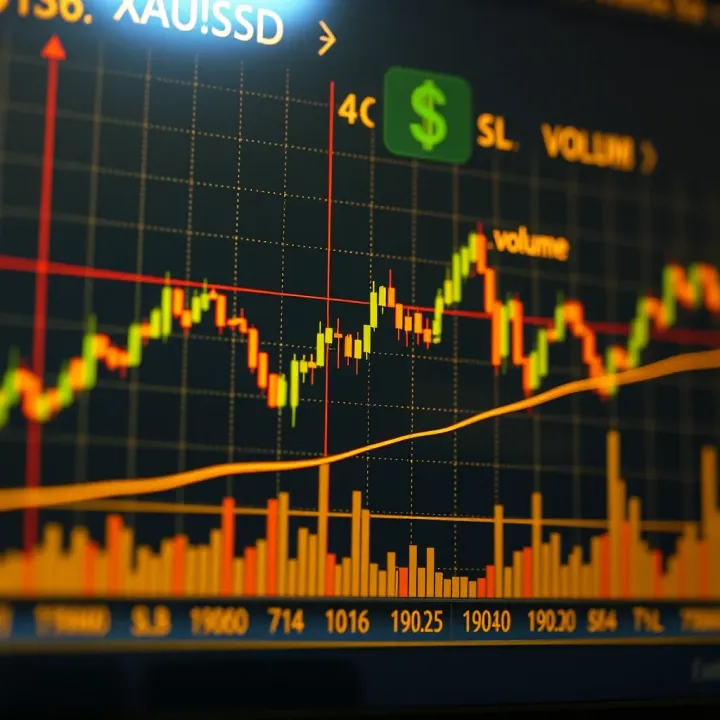
According to Nairobi Securities Exchange (NSE) reports, many local investors have increased interest in gold-backed financial products, making the ability to read the XAUUSD chart very practical for portfolio diversification.
Knowing how to interpret this chart can help you time your gold buy or sell decisions better, reducing guesswork and potential losses.
Price axis: Represents gold price per ounce in US dollars. Since the Kenyan shilling fluctuates against the dollar, understanding the chart helps Kenyan traders anticipate local effects.
Time axis: Shows historical data, ranging from minute-by-minute movements to several years. Short-term traders may focus on hourly or daily charts, while investors might look at weekly or monthly data.
Candlestick patterns: Popular for showing opening, closing, high, and low prices in a time frame. For example, a green (or white) candle shows a price rise, while red (or black) indicates a drop.
Volume bars: Indicate how many gold contracts or lot sizes traded during the period, which can hint at strength behind price moves.
Understanding how each part works together helps reveal market sentiment and possible price shifts, guiding your trading strategy.
Besides global economic factors, Kenya’s own financial policies and political environment can influence the shilling-dollar rate, making local timing important. For instance, around election periods, gold often becomes a safe haven asset.
Mastering the XAUUSD chart equips you to react quickly to such shifts and plan trades or investments aligned with both global and domestic conditions.
Next sections will explore common chart patterns and tips on how to use this information specifically within Kenya’s financial context.
The XAUUSD chart is a crucial tool for traders and investors who follow gold prices expressed in US dollars. Knowing how to interpret this chart gives you a solid footing in tracking gold’s market performance, which affects both global markets and Kenya’s financial landscape. For example, when world events cause the US dollar to fluctuate, the XAUUSD chart shows how gold prices respond in real time. Understanding these movements can help Kenyan traders make smarter decisions, whether for short-term gains or long-term investment.
XAU is the ticker symbol used in financial markets to represent one troy ounce of gold. It’s a standard unit that helps traders worldwide measure gold prices consistently. This measure is particularly important because gold is a tangible asset often considered a safe store of value. For Kenyan investors, this means they can understand the exact price of gold without worrying about local currency fluctuations or unusual units.
Gold prices in the XAUUSD pair are quoted in US dollars, meaning each unit on the chart shows how much one ounce of gold costs in USD. Since the US dollar is a global reserve currency, any changes in its strength directly affect gold's price. Usually, when the dollar weakens, gold prices rise as investors seek safety. Conversely, a strong dollar often pushes gold prices down. This inverse relationship is key for Kenyan traders because many commodities and imports are priced in dollars, influencing the local economy and investment strategies.
Traders use the XAUUSD chart to spot price trends and identify buying or selling opportunities. For example, a Kenyan trader might track this chart alongside local economic news to decide the best time to buy gold or gold-backed investments. Investors, on the other hand, watch long-term price movements to see how gold fits in their portfolios as a hedge against inflation or currency risks. Knowing the XAUUSD price can also help those in the jewellery or matatu businesses price their goods or services fairly.
Globally, gold acts as a barometer for economic health and investor confidence. Political instability or inflation often triggers a move into gold, driving prices up. In Kenya, this matters because the country's financial markets and import prices are influenced by global gold trends. Additionally, many Kenyan banks and investment firms offer gold-related products pegged to XAUUSD prices. For Kenyan traders, following the XAUUSD chart is practical for understanding how an international asset impacts local investing and trading decisions.
Tracking the XAUUSD chart gives Kenyan traders a direct line to how global events and US dollar strength affect gold prices, shaping investment choices in a fast-moving market.
Understanding the main elements of the XAUUSD chart is essential for Kenyan traders looking to make informed decisions. These charts not only display the price of gold in US dollars but also reveal trends, price movements, and trading signals that traders rely on daily. Familiarity with these elements allows traders to spot opportunities, manage risks, and understand the market context better.
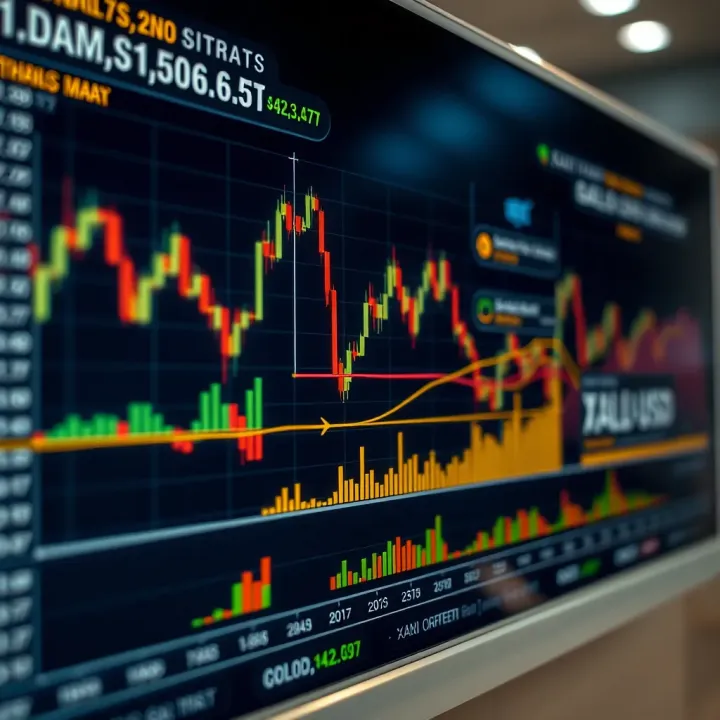
The spot price reflects the current market price for immediate delivery of gold. Traders see it as the real-time value at which gold can be bought or sold today. On the other hand, futures contracts represent an agreement to buy or sell gold at a set price on a specified future date. For instance, a gold futures contract at NSE or international platforms might show where traders expect gold prices to be in three months. Spot prices are perfect for those focusing on quick trades, while futures suit investors preparing for longer-term moves or hedging against price fluctuations.
Price charts usually display the gold price on the vertical (y) axis and time on the horizontal (x) axis. This setup allows Kenyan traders to track how gold’s price evolves over hours, days, or months. The price scale can be linear—showing equal spacing for each price increment—or logarithmic, which is better for representing percentage changes, especially during volatile periods. For example, a leap from KSh 7,000 to KSh 7,500 means more in real terms than a jump from KSh 10,000 to KSh 10,500, and the logarithmic scale reflects that more clearly.
A line chart connects closing prices over time to form a simple, clean line. This type is ideal for Kenyan traders interested in a quick overview without too much detail. For example, if you want to see how gold prices moved over the last month, a line chart quickly highlights overall direction but won’t show intraday fluctuations. It’s a good starting point for beginners or those more interested in identifying broad trends without getting bogged down in complexities.
Candlestick charts offer more depth by including opening, closing, high, and low prices within each time interval—typically daily or hourly. Each "candle" shows whether gold closed higher (usually a green or white candle) or lower (red or black) compared to the opening price. Kenyan traders benefit from this rich information since patterns like “doji” or “hammer” can signal potential price reversals or continuations. For example, spotting a bullish engulfing candle after a drop might hint at an upcoming price increase.
Similar to candlesticks, bar charts present the high, low, open, and close prices but with a simpler visual style. Each bar has a vertical line (high-low range) and horizontal ticks for open and close prices. This type appeals to traders who want detailed price action information but prefer less colour coding. It's effective for those analysing market volatility or confirming support and resistance levels.
Short-term time frames like minutes or hours suit traders aiming to capitalise on quick price changes. This approach is common for active day traders or scalpers who might open and close positions within a single session. Conversely, long-term charts—daily, weekly, or monthly—are more useful for investors looking to hold positions over weeks or months, focusing on broader economic factors influencing gold prices. For example, a Kenyan trader preparing for inflation changes might follow monthly charts to avoid the noise of daily fluctuations.
Given the hustle of daily life and the volatility in forex markets, many Kenyan traders prefer using intermediate time frames like the 4-hour or daily charts. These frames strike a balance by providing enough detail for effective decision-making without overwhelming the trader with information. Also, considering time zone differences and market hours, daily charts help Kenyan traders review markets after work hours and plan for the next day. For those trading on platforms like Safaricom’s M-Pesa integrated broker apps, such time frames fit well with everyday schedules.
Mastering these key elements is the foundation for navigating the XAUUSD chart effectively. It equips Kenyan traders with practical tools to read price changes, select suited chart types, and choose time frames that match their trading style and lifestyle.
Understanding what moves gold prices on the XAUUSD chart is essential for Kenyan traders. The price of gold doesn't change in isolation—it reflects a mix of economic data, global events, and shifts in supply and demand. By knowing these factors, you can better predict price trends and make smarter trading decisions.
Inflation rates and interest rates play a major role in gold prices. When inflation rises, the value of money drops, and people often turn to gold to protect their savings, pushing prices up. For example, if Kenya experiences high inflation affecting the cost of basic goods, investors might look to gold as a safer store of value. Similarly, rising interest rates tend to make holding cash or bonds more attractive, which could drag gold prices down since gold doesn’t generate interest.
US dollar strength and central bank policies matter because gold is priced in US dollars on the XAUUSD chart. A strong dollar usually means gold becomes more expensive for holders of other currencies, leading to lower demand and price drops. Central banks, including the US Federal Reserve, influence this by adjusting interest rates or buying gold reserves. Kenyan traders should watch announcements from central banks, as changes there often trigger quick movements on the chart.
Political instability and conflicts often push gold prices higher. When uncertainty rises—say due to conflicts in regions important for trade or resource extraction—investors move away from risky assets to gold for safety. For instance, unrest in the Middle East or North Africa may cause gold prices on the XAUUSD chart to spike sharply. Kenyan traders should track such news since it impacts global market mood.
Safe-haven demand during crises boosts gold’s appeal. In times of financial crashes, pandemics, or major disasters, buyers flock to gold because it holds value better than many assets. The 2008 financial crisis saw gold soar as investors scrambled for stability. For Kenyan investors, recognising when safe-haven demand is rising can open opportunities to enter trades when gold prices rise quietly before wider panic sets in.
Mining output and production costs influence gold availability and price. If mining companies reduce output due to rising costs or logistical challenges, supply tightens, pushing prices up. For example, disruptions in South Africa’s mines have occasionally reduced gold supply and affected prices globally. Kenyan traders should be aware that supply-side factors may cause price swings independently of demand.
Jewellery and industrial demand also shifts prices. Gold’s popularity in jewellery across Asia and demand for electronics can pull prices up. During festive seasons like Diwali or Chinese New Year, demand spikes visibly affect gold prices. Similarly, technological advances that change gold’s industrial use can impact long-term trends. Kenyan traders should consider these demand cycles when timing their trades.
Keeping an eye on these factors and how they interact will help you read the XAUUSD chart more effectively. Remember, gold prices respond quickly to changes in global economics and sentiment, so staying informed is key to success.
The XAUUSD chart is essential for traders aiming to make smart moves in the gold market. It shows the price of gold in US dollars, helping traders track changes and decide when to buy or sell. Understanding how to use this chart properly can protect your investment and even boost profits by identifying the right moments to act.
Trend lines and support/resistance levels help traders spot where gold prices might change direction. A trend line connects price points on the chart and shows the general direction—upwards for a rising market, downwards for declining. Meanwhile, support levels mark prices where gold often stops falling and bounces back, while resistance levels show where prices struggle to rise past. For example, if gold has often bounced back from KSh 5,000 per gramme before, this price acts as support. Kenyan traders can use these points to decide when to enter or exit trades.
Moving averages and RSI indicators give clearer signals on market momentum. Moving averages smooth out daily price changes to show a trend over time—like the 50-day or 200-day average. When the current price crosses these averages, it may signal a change in trend. The Relative Strength Index (RSI) measures if gold is overbought or oversold, using a scale from 0 to 100. An RSI above 70 usually means gold is overbought and might drop soon; below 30 suggests oversold conditions, potentially signalling a buying chance. These tools help bring precision to decision-making, especially in volatile times.
Recognising chart patterns like head and shoulders can indicate possible trend reversals. This pattern looks like three peaks, where the middle is higher (head) with two smaller peaks (shoulders) on either side. In the XAUUSD chart, spotting this pattern may warn traders of an upcoming fall in gold prices. Kenyan investors should watch carefully as such patterns can hint at profitable exit points.
Candlestick formations signalling reversals provide even quicker insights. Patterns like the hammer or shooting star reveal where buying or selling pressure might shift. A hammer at the bottom of a downtrend suggests sellers are weakening, and buyers could push prices up soon. Conversely, a shooting star at the top signals potential price drops. Using candlestick formations helps Kenyan traders spot entry or exit points without waiting for longer-term confirmation.
Setting stop-loss and take-profit points protects your capital and locks in profits. A stop-loss automatically sells gold if prices fall to a level where losses become unacceptable, limiting downside risk. Take-profit points close a trade when a price target is hit, securing gains before the market reverses. For example, if you buy gold at KSh 5,200, setting a stop-loss at KSh 5,100 and take-profit at KSh 5,400 helps control your trade’s outcome.
Position sizing for Kenyan investors ensures you only risk what you can afford. This means deciding how much money or gold to trade based on your total capital and risk tolerance. For instance, a trader with KSh 100,000 might decide to risk just 2% per trade—KSh 2,000—to avoid heavy losses that could wipe their account. Proper position sizing keeps your trading sustainable in the unpredictable gold market.
Smart trading in XAUUSD depends not just on spotting trends but also managing risk carefully. Kenyan traders who combine analysis with clear risk limits improve chances for steady success.
Using these tools and strategies on the XAUUSD chart helps Kenyan traders make informed trading decisions and manage their investments wisely.
Accessing and monitoring the XAUUSD chart plays an essential role for Kenyan traders and investors interested in gold trading. The chart provides real-time updates on gold prices in US dollars, allowing users to make informed decisions quickly. Since gold is a widely traded commodity on global markets, keeping an eye on this chart helps Kenyans spot price trends, assess market conditions, and time their trades effectively.
Moreover, in Kenya's growing financial market, timely access to accurate data is key, especially since gold also serves as a hedge against currency fluctuations and inflation. Traders who watch the XAUUSD price closely can respond to global news and local economic changes faster, improving their chances of making profitable trades.
Several recognised online platforms and brokers offer reliable, real-time XAUUSD charts. Popular brokerages like AvaTrade, IG Group, and Plus500 provide user-friendly interfaces with integrated charting tools tailored for forex and commodity traders. Kenyan users benefit from these platforms due to their fast execution and transparent pricing. They also often include educational content and market analysis, helping traders sharpen their skills.
Apart from brokers, financial news websites such as Bloomberg and Investing.com maintain up-to-date chart displays accessible on desktop or mobile. These platforms also offer key data points such as volume, highs and lows, and charting indicators, which are practical for both beginners and seasoned traders.
Mobile apps play a growing role in Kenya's trading environment. Apps like MetaTrader 4 and 5, as well as TradingView, have wide adoption among Kenyan traders. These apps support real-time price tracking, customised charts, and alerts, all accessible from a smartphone. Their offline caching features mean you can still review charts without constant internet access, a useful trait given occasional connectivity challenges in certain areas.
Additionally, many brokers offer their own mobile apps with direct integration to M-Pesa for deposit and withdrawal, streamlining the process for Kenyan users.
Using M-Pesa and other local payment options has become standard for many Kenyan traders when funding their trading accounts or withdrawing profits. The integration of M-Pesa with numerous online brokers simplifies transactions by avoiding traditional banking delays or charges. For example, a Nairobi-based trader can deposit KSh 50,000 directly via M-Pesa to their broker account within minutes, enabling them to take advantage of sudden gold price movements immediately.
This local payment convenience reduces barriers to entry, especially for small-scale traders or those in remote regions. It also builds trust, as mobile money is widely trusted across Kenya for everyday transactions.
Connecting with Kenyan financial advisors is another practical step, especially for investors new to gold trading or those managing larger portfolios. Local advisors understand the nuances of Kenyan market conditions, taxation policies, and regulations concerning commodities trading. They can provide tailored advice on interpreting XAUUSD charts in the context of Kenyan shilling trends or geopolitical events impacting local markets.
Advisors also help in setting realistic risk management frameworks, such as appropriate position sizes or stop-loss levels considering local economic factors. Their expertise bridges the gap between global markets and the Kenyan investment environment, making XAUUSD chart analysis more relevant and actionable.
Real-time data, combined with local payment options and financial guidance, empowers Kenyan traders to navigate gold trading with greater confidence and efficiency.
📊 Discover Olymp Trade's features, benefits, and risks tailored for Kenyan traders. Learn smart strategies, platform basics, and how to start trading from KSh safely.

📈 Looking to excel in forex trading? This guide explains what Kenyan traders need in forex courses, covering practical tips, formats, and key topics to boost success.
Explore how Deriv Mpesa connects trading and Mpesa for Kenyan users📱. Learn benefits, security tips🔒, and easy steps for smooth transactions💹.

Explore Deriv Forex with tips for Kenyan traders 🚀. Learn about account types, trading tools, risk strategies & legal info to boost your Forex journey!
Based on 6 reviews