

EUR/USD Forecast Today: Market Trends and Insights
📈 Get today's detailed EUR/USD forecast with market trends, interest rates impact, and geopolitical events analysed for smart trading decisions in Kenya and across Africa.
Edited By
Grace Hamilton
The EUR/USD currency pair is the most traded forex pair worldwide, representing the exchange rate between the euro and the United States dollar. Understanding its movements requires close attention to an array of economic, geopolitical, and market-related factors that influence demand and supply.
At its core, the EUR/USD rate reflects the strength of the European economy relative to that of the US. Economic indicators like GDP growth rates, inflation, employment figures, and central bank policy decisions play major roles in shaping expectations for each currency. For instance, if the European Central Bank (ECB) signals tightening monetary policy while the US Federal Reserve remains dovish, the euro may gain against the dollar.

Exchange rates aren’t random; they're shaped by measurable economic data and real-world events.
Political events and geopolitical tensions also impact the EUR/USD pair significantly. Trade disputes, elections, and global crises often trigger volatility as investors adjust their risk appetite. Take the European debt crisis back in 2011—uncertainty over Greece's finances sent the euro tumbling, which in turn affected trading strategies across forex markets.
Market sentiment and speculative actions add another layer of complexity. Trends may sometimes reflect herd behaviour or reaction to news rather than fundamentals alone. For example, if traders anticipate a rate change from the Fed, the EUR/USD may move even before official announcements.
To forecast the EUR/USD pair effectively, traders and analysts combine technical analysis with a deep understanding of these fundamental drivers. Watching key releases—like US Non-Farm Payrolls, ECB press conferences, and inflation data—can help anticipate short-term swings. Moreover, keeping an eye on broader global developments such as oil price changes or geopolitical shifts adds valuable context.
In summary, forecasting the EUR/USD exchange rate depends on:
Careful monitoring of economic data from both Europe and the US
Staying updated on political and geopolitical events affecting risk sentiment
Understanding market psychology and speculative activity
Applying proven technical analysis tools alongside fundamental insights
This approach helps traders and investors navigate the complexities of the forex market and make informed decisions on this vital currency pair.
Understanding the EUR/USD currency pair is key for anyone dealing with global forex markets. This pair represents the exchange rate between the euro, used by 19 European countries, and the US dollar, the world's most widely traded currency. Having a solid grasp of this pair’s dynamics helps traders and investors anticipate market movements and manage risks effectively.
The euro and the US dollar are central to international trade and finance. The euro, introduced in 1999, unites diverse European economies under a single currency, making it easier for businesses in the Eurozone to trade across borders without worrying about exchange rate shifts. For instance, companies in Germany can trade with those in France or Spain using the euro without extra forex fees.
On the other side, the US dollar serves as the world's main reserve currency. Many global commodities, such as oil and gold, are priced in dollars, prompting international buyers and sellers to hold and transact in USD. This heavy reliance means fluctuations in the US economy or policies, including Federal Reserve interest rate changes, ripple through other markets.
EUR/USD is the most actively traded currency pair, accounting for roughly 20% of daily forex turnover. Its liquidity means tight spreads and lower costs for trading, attracting a wide spectrum of market participants from individual traders in Nairobi to large international banks.
The pair also reflects differences in economic strength and monetary policy between the Eurozone and the US. For example, if the European Central Bank (ECB) cuts rates while the Federal Reserve hikes, EUR/USD tends to weaken as dollars gain appeal. This relationship makes EUR/USD a barometer for global investor sentiment towards these two economic powerhouses.
EUR/USD has experienced several significant shifts over the past two decades. Shortly after its launch, the euro dropped as low as around 0.83 USD in 2000. However, it steadily strengthened to almost 1.60 USD by 2008, driven by optimism about Europe’s economic prospects and the US housing market troubles.
During the global financial crisis and later the Eurozone debt crisis, EUR/USD plunged sharply, reflecting investors’ flight to safety and concern about the European debt load. More recent times have seen fluctuations tied to trade tensions, Brexit, and pandemic-related uncertainties, illustrating how political and economic shocks shape the pair.
Over the long term, EUR/USD has shown a tendency to revert around parity or slightly above, though several swing phases bring bouts of volatility. For example, the pair often reacts strongly to ECB and Fed announcements, signalling shifts in capital flows.
Traders and investors should factor in this volatility margin when planning positions. For instance, sharp swings beyond 1-2 cents in a single session can present both risk and opportunity. Understanding these trends helps financial analysts discern between temporary disturbances and lasting shifts in the currency landscape.
Remember: Keeping an eye on economic releases, central bank meetings, and geopolitical events is vital since these tend to drive the major swings in the EUR/USD pair.
This overview sets the stage for deeper discussions on the economic indicators, geopolitical influences, and technical strategies that shape EUR/USD outlooks today.
Economic indicators play a big role in shaping the EUR/USD exchange rate. Traders and investors keenly watch these numbers because they signal the health of the European Union (EU) and the United States (US) economies. Changes in growth rates, inflation, and interest rates can shift the balance of demand between the euro and the dollar. Understanding these indicators helps in making informed predictions about future movements in the currency pair.
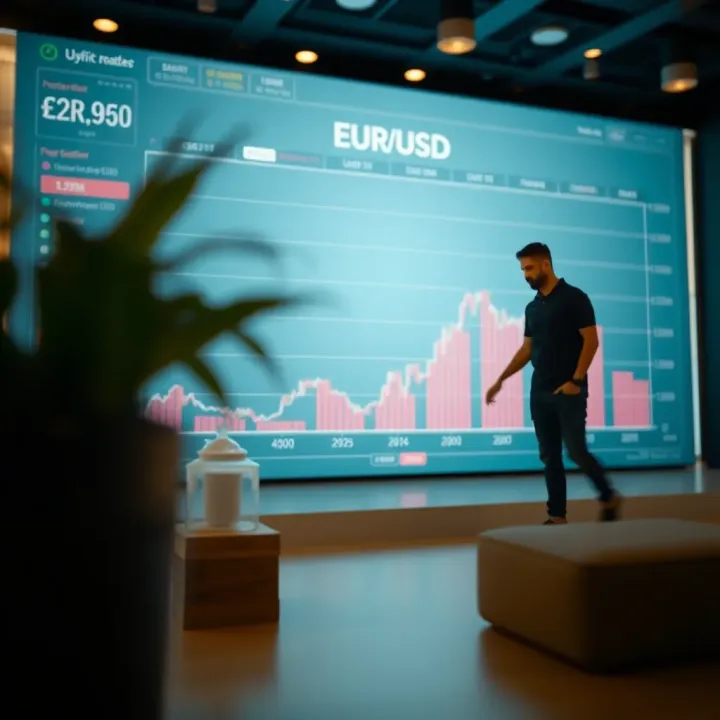
The eurozone’s Gross Domestic Product (GDP) growth measures how fast the economy is expanding. When GDP rises steadily, it usually signals stronger economic activity and boosts the euro’s value against the dollar. For example, a report showing the eurozone economy grew by 1.2% in a quarter can prompt traders to expect a firmer euro.
Inflation rates are another key figure. Moderate inflation suggests healthy demand while very high inflation can erode purchasing power. The European Central Bank (ECB) aims for inflation close to but below 2%. If inflation runs above this target, traders often anticipate tighter monetary policy, which supports the euro. Conversely, low inflation may point to looser policies, weakening the currency.
The ECB’s decisions on interest rates and asset purchases directly influence EUR/USD moves. When the ECB raises interest rates, it typically attracts more investors to the euro, pushing its value up. For instance, the ECB tightening rates in response to rising inflation can strengthen the euro.
On the flip side, if the ECB signals more accommodative policies like prolonging bond purchases or cutting rates, the euro tends to weaken. Traders watch ECB meetings and statements closely since even subtle hints about future policy can cause noticeable swings in the EUR/USD.
The US Federal Reserve’s (Fed) interest rate moves are among the most influential drivers of the USD’s strength. An interest rate hike generally makes the dollar more attractive to investors seeking higher returns, causing the EUR/USD pair to decline. For example, the Fed’s rate increases in recent years have coincided with US dollar rallies.
In contrast, rate cuts or dovish signals from the Fed often dampen demand for the dollar. Traders often react not just to the actual rate change but to the accompanying forward guidance, which shapes expectations about forthcoming moves and the USD outlook.
US employment data, like the monthly Non-Farm Payrolls (NFP), reveal the health of the economy and are a major USD driver. Strong job growth can signal economic resilience, encouraging higher rates and a stronger dollar. Weak employment numbers may have the opposite effect.
Inflation figures, such as the Consumer Price Index (CPI), also impact USD valuation. If inflation is rising faster than expected, the Fed might respond with tighter policy, boosting the dollar. However, if inflation cools or falls short of expectations, the market may price in looser monetary measures, pressuring the USD.
Monitoring these economic indicators from both sides of the Atlantic is essential for traders tracking EUR/USD. They provide tangible signals that help anticipate shifts in the currency pair’s value, enabling better trading strategies and risk management.
Geopolitical events and market sentiment play a significant role in shaping the EUR/USD exchange rate. Political developments in both the European Union (EU) and the United States (US) can cause sudden shifts in currency values. Likewise, the mood of investors—whether cautious or confident—drives the demand for the euro or the dollar. Understanding these factors gives traders and investors a practical edge in anticipating market moves.
Elections, policy changes, and trade agreements directly affect the EUR/USD pair by altering expectations of economic stability and growth. For example, a surprise election outcome in a major EU country might lead to uncertainty about future fiscal policies, pushing the euro down as investors move to safer currencies. Similarly, changes in US trade policies, such as new tariffs or trade deals, influence the dollar's strength by impacting export-import balances.
Trade agreements, especially between the EU and the US, often signal closer economic ties or tensions. When new agreements are announced, this can boost investor confidence, strengthening both currencies. Conversely, stalled negotiations might increase volatility, as traders react to potential disruptions in cross-Atlantic commerce.
The impact on investor confidence and volatility cannot be overstated. Political stability usually encourages investment, reducing volatility and supporting currency strength. In contrast, political uncertainty—like protests, leadership disputes, or shifting alliances—tends to shake markets. For example, during the Brexit process, the euro experienced periods of sharp volatility due to concerns over EU cohesion and trade relations with the UK and US.
Volatility offers both risks and opportunities for traders; understanding how political events influence this is key to managing positions and timing trades effectively.
Investor mood impacts EUR/USD through the demand for safe-haven assets. When global markets face turmoil—be it from geopolitical tensions or economic slowdowns—investors often flock to the US dollar, seen as a safer bet due to the size and stability of the US economy. This flight to safety typically pushes the dollar up and can push the euro down.
For instance, during times of increased tensions in the Middle East or heightened concerns about the global economy slowing down, the dollar usually gains as traders seek protection. Conversely, in periods of optimism and increased risk appetite, investors prefer higher-yielding assets, sometimes bolstering the euro when European markets show growth potential.
Global economic uncertainties—such as trade wars, pandemics, or shifts in central bank policies—also influence market sentiment and, in turn, affect EUR/USD movements. Investors tend to react quickly, adjusting their portfolios in response to news, which causes fluctuating exchange rates. For example, uncertainty about Federal Reserve interest rate changes often sparks rapid moves in EUR/USD as traders bet on future US monetary conditions.
Keeping a watchful eye on political news and market mood helps traders position themselves wisely. Changes in sentiment can cause swift shifts in the EUR/USD rate, making risk management essential in forex trading.
By monitoring geopolitical developments and shifts in market sentiment, investors stand a better chance of decoding the EUR/USD’s ups and downs. This approach complements economic data analysis, painting a fuller picture of what moves this key currency pair.
Forecasting the EUR/USD exchange rate involves understanding multiple factors that influence currency movements. This section explores common forecasting approaches, emphasising techniques that traders and investors can use to make informed decisions. Combining technical and fundamental methods provides a fuller picture of how this currency pair might behave amid changing economic and political conditions.
Chart patterns and trendlines play a significant role in technical forecasting. Traders use historical price charts to spot recurring shapes—like head and shoulders, double tops, or flags—that can signal future trends. Drawing trendlines helps identify support and resistance levels where price movements may stall or reverse. For example, if EUR/USD consistently bounces off a rising trendline, it suggests buyers remain confident around that level. Conversely, a break below the line may indicate a shift toward selling pressure.
Price charts also help detect momentum shifts quickly, which are crucial for timing entries or exits. Kenyan traders following EUR/USD may notice that after a consolidation pattern like a triangle, the price often spikes in one direction. Recognising these formations can guide short-term trading strategies, helping avoid costly mistakes.
Use of indicators like RSI and moving averages adds another layer to technical analysis. The Relative Strength Index (RSI) measures whether the pair is overbought or oversold. When RSI crosses above 70, it suggests the pair might face a pullback; below 30 hints at a potential bounce. This is practical in fast-moving markets where prices can overshoot.
Moving averages smooth out price fluctuations, showing the underlying trend. For instance, a 50-day moving average crossing above the 200-day moving average forms a 'golden cross,' often seen as a bullish signal. Traders commonly watch these crossovers to confirm trends or spot reversals. This helps reduce noise from random price swings, making trading decisions more disciplined.
Interpreting economic reports is vital for understanding forces behind EUR/USD moves. Releases like Eurozone GDP growth, US employment figures, or inflation data provide clues about economic health. For instance, stronger US jobs numbers may push the dollar higher against the euro, reflecting better growth expectations.
Kenyan investors paying attention to these reports can anticipate market sentiment shifts. For example, if the European Central Bank signals worries about slowing growth, traders may expect euro weakness. Knowing the timing and content of reports aids in positioning to profit or limit losses.
Evaluating monetary policy statements from the European Central Bank (ECB) and US Federal Reserve is similarly critical. Statements on interest rate changes or asset purchase programmes directly influence the currency pair. An unexpected hawkish tone (signalling higher rates) typically boosts that currency's value.
In practice, traders watch press conferences and minutes closely. When the Fed hints at slowing rate hikes while the ECB talks about tightening policy, the EUR/USD may rise. Such moves can be sharp, so prompt interpretation of these statements helps in reacting timely.
Integrating technical and fundamental insights offers a balanced forecasting approach. Technical tools help judge market timing and price levels, while fundamental analysis explains why moves happen and their longer-term context. For example, if technical patterns suggest a bounce but economic reports warn of eurozone slowdown, a trader might exercise caution or adjust position sizes.
This combined method suits Kenya’s forex traders who face both rapid intraday swings and longer-term trends shaped by global events. It promotes flexibility rather than rigid reliance on a single approach.
Risk management in volatile markets is essential when forecasting EUR/USD. Currency markets often react unpredictably to sudden political news or economic shocks. Using stop-loss orders, setting reasonable profit targets, and avoiding over-leveraging are vital.
One practical tip is to allocate a fixed portion of capital per trade rather than chasing high returns. This approach prevents large drawdowns and allows traders to stay in the game longer, especially when unexpected volatility hits.
Forecasting EUR/USD is not about certainty but boosting probability by combining solid analysis with disciplined risk control. Kenyan investors benefit by staying adaptable, tracking both charts and fundamental news closely, and managing risk wisely.
Tracking the EUR/USD currency pair requires reliable resources and effective tools. These allow traders, investors, and financial analysts to stay on top of market-moving information and make informed decisions. Timely updates on economic events and the ability to analyse market data in real-time are crucial, especially given the pair’s sensitivity to economic and geopolitical changes.
Staying informed with timely news is essential for anyone dealing with forex, particularly the EUR/USD pair. Trusted international and regional news platforms like Reuters, Bloomberg, and CNBC provide ongoing coverage of economic releases and geopolitical developments affecting the euro and US dollar. For localised impact, financial news from Reuters Africa or Business Daily can give extra insight on currency movements tied to African markets.
Financial institutions, including central banks like the European Central Bank (ECB) and the US Federal Reserve, often publish statements and press releases affecting the currency pair. Traders should monitor these primary sources alongside broader market news to understand shifts in policy or economic outlook that influence EUR/USD.
Economic calendars are invaluable for pinpointing when key data will be released. They list dates and times for GDP figures, unemployment data, inflation rates, and central bank meeting announcements. For example, tracking the US Non-Farm Payroll (NFP) release or Eurozone Consumer Price Index (CPI) reports helps anticipate volatility spikes in EUR/USD.
Many online platforms and forex brokers provide interactive economic calendars where you can filter by currency, importance, or event type. This lets you focus on the most relevant releases for the EUR/USD pair and adjust your trading strategy accordingly.
Choosing the right trading platform matters a lot when monitoring EUR/USD. Essential features include real-time price quotes, fast execution speeds, and access to margin trading to optimise capital use. A user-friendly interface that supports customisable watchlists and alerts can help track the pair closely without missing key moves.
Platforms like MetaTrader 4 or 5, cTrader, and trading apps by local banks such as KCB or Equity offer these capabilities. Integration with mobile apps means traders can monitor and react to EUR/USD changes anywhere, crucial in fast markets.
Successful forecasts combine technical and fundamental analysis tools. Technical tools include indicators like the Relative Strength Index (RSI), moving averages, and Bollinger Bands, which reveal trends, momentum, and potential reversal points.
On the fundamental side, software that aggregates economic data releases, news flashes, and central bank updates saves time and ensures traders act on accurate information promptly. Some platforms feature charting tools that overlay economic events onto price charts, making it easier to correlate movements with causes.
Regular use of these resources sharpens your sense of timing and market context, improving your overall trading decisions on the EUR/USD pair.
Employing reliable resources and modern tools caters not just to professionals but also new traders aiming to understand the nuances of EUR/USD movements effectively.
📈 Get today's detailed EUR/USD forecast with market trends, interest rates impact, and geopolitical events analysed for smart trading decisions in Kenya and across Africa.

📊 Bitcoin Price USD Prediction: Discover key market dynamics, insights from technical & fundamental analysis, plus risk factors to watch for smart investing.
📈 Stay ahead with detailed USD to INR exchange rate forecasts! Understand economic trends, expert views, and practical impacts for your business and investments.

📉 Explore in-depth analysis of AUD/USD trends, key economic factors, and market forces shaping currency moves for savvy traders and investors in Kenya.
Based on 14 reviews