
Understanding Derivative Trading in Kenya
Explore derivative trading in Kenya 📈 Learn types, risks, rewards & how to use these tools for smart investing, hedging, and managing portfolios wisely.
Edited By
Liam Bennett
In forex trading, free margin refers to the funds in your trading account that are available to open new positions or to buffer against losses on existing trades. Think of it as your financial breathing room—without enough free margin, you can’t afford to take on more trades or guard against unexpected market twists.
Free margin is closely linked with two main figures: equity and used margin. Equity represents your total account balance including unrealised profits or losses from open trades. Used margin, on the other hand, is the amount locked up to maintain those trades. The difference between equity and used margin gives you your free margin.
For example, if your account equity stands at KSh 100,000 and you have KSh 30,000 tied up in used margin, your free margin will be KSh 70,000. This means you have KSh 70,000 ready to open more positions or cushion against losing trades.
Free margin is the cushion that keeps you in the game when markets move against you, so managing it carefully is vital.
To calculate free margin:
Determine your current equity (account balance ± open trade profits or losses).
Note your used margin (the portion reserved for existing positions).
Subtract used margin from equity.
plaintext Free Margin = Equity – Used Margin
Monitoring free margin helps you avoid margin calls or forced liquidations that can wipe out your account. In Kenya’s forex market, where volatility can be high due to global economic shifts or local currency movements, keeping an eye on free margin keeps you nimble.

Proper free margin management allows you to:

- Take advantage of market opportunities without overexposing yourself
- Control risk by avoiding over-leveraging
- Maintain smooth trade operations, especially during volatile periods

Understanding the relationship between free margin, equity, and used margin will empower you to make smarter decisions when trading forex. The next sections will dissect these concepts further and explore practical ways to monitor free margin effectively in daily trading.

## What Free Margin Means in Forex Trading

Free margin is a vital concept forex traders must understand to manage their funds and risk effectively. Simply put, free margin is the amount of money in your trading account available to open new trades or withstand losses without triggering a margin call. For Kenyan traders especially, who often deal with fluctuating markets and local economic changes, knowing your free margin helps avoid unexpected account closures.

### Defining Free Margin

Free margin is the difference between your account equity and the margin already used in your open positions. Equity is your total balance plus or minus any profits or losses from open trades, while margin is the collateral needed to keep those trades active. For example, if your [trading](/articles/understanding-derivative-trading-kenya/) account balance is KS00,000 and you have used KS0,000 as margin for existing positions, while floating profits or losses amount to KS,000 in profit, your equity is KS05,000. Subtract the used margin (KS0,000) from equity (KS05,000), and your free margin will be KSh85,000. This free margin is what you can use to open more trades or absorb losses.

Understanding free margin is crucial because it directly impacts your buying power and buffers your account from liquidation risks. Without sufficient free margin, new trades can’t be executed, and existing positions risk closure if losses grow too large.

### Its Role Compared to Margin and Equity

It's helpful to see how free margin fits alongside margin and equity, which are closely linked but distinct terms. Margin is the money “locked” to hold your open positions — think of it as a security deposit. Equity, meanwhile, reflects your current account value including unrealised profits or losses.

Free margin, by contrast, is the leftover buffer after accounting for used margin. This means having a big equity doesn’t guarantee free margin if your margin is equally high. For instance, a trader with KS00,000 equity but KS95,000 margin used has only KS,000 free margin left. This situation leaves little room for market swings before a margin call.

> Keeping an eye on free margin is just as important as monitoring your balance and equity. It determines if you can keep your trades running and whether you can explore new opportunities.

In the Kenyan market context, where [forex](/articles/binary-forex-trading-guide-kenya/) brokers offer various leverage levels, understanding these distinctions helps you trade wisely, avoiding the pitfalls of overleverage and sudden losses that can deplete your account fast. Simple but accurate tracking of free margin is your frontline defence against such risks.

## How to Calculate Free Margin

Knowing how to calculate free margin is a vital skill for any forex trader. It helps you understand the amount of funds available to open new positions or to withstand ongoing trade fluctuations without facing a margin call. Without this knowledge, it's easy to overtrade or mismanage risk, leading to losses or forced liquidation.

### Understanding the Formula

Free margin is arrived at by subtracting the used margin from your equity. The formula looks like this:


Free Margin = Equity - Used Margin
Here, Equity refers to your account balance plus or minus any unrealised profit or loss from open trades. Meanwhile, Used Margin is the total amount locked up in trades you currently hold. This difference — the free margin — shows how much is free for new trades or to cover changes in existing positions.
For example, even if your account balance is KS0,000, if you have open trades using KS0,000 margin, your free margin is KS0,000.
Understanding this formula ensures you know exactly the buying power in your trading account at any moment. It protects you from situations where the free margin drops to zero or below, triggering a margin call or stop out.
Let’s say you start with an account balance of KS00,000. You open a trade that requires a margin of KS5,000. After some time, your open position gains a profit of KS,000, making your equity KS05,000 (account balance KS00,000 + unrealised profit KS,000).
Applying the formula:
Equity = KS05,000
Used Margin = KS5,000
Free Margin = KS05,000 - KS5,000 = KSh80,000
This means you still have KSh80,000 available to open new trades or to cushion against negative movements. Should the market go against your position and your unrealised profit become a loss of KS0,000, then equity falls:
Equity = KSh90,000 (100,000 - 10,000)
Used Margin = KS5,000
Free Margin = KSh65,000
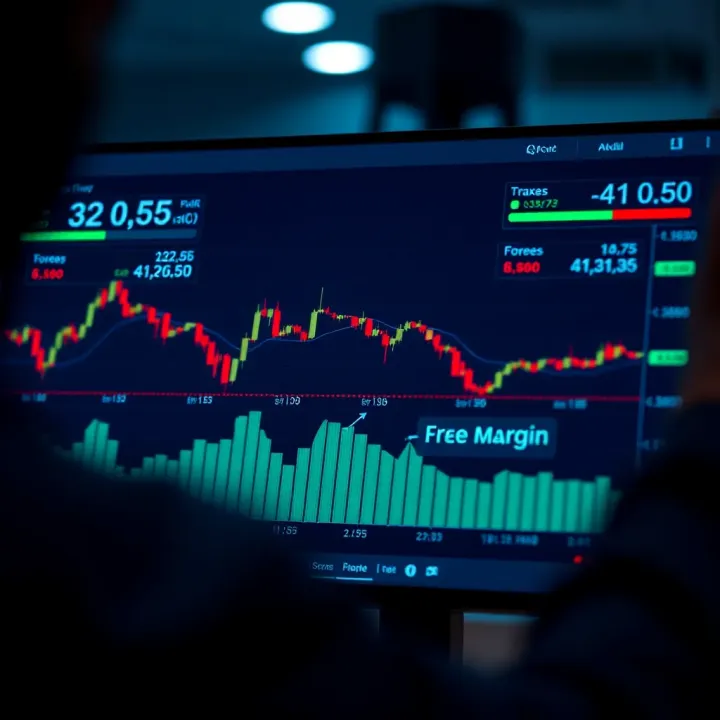
Even in this less favourable case, you have free margin left to avoid a margin call.
Understanding this dynamic allows Kenyan traders to plan their trades smartly, especially when using leverage within local brokers’ platforms. Always keep tabs on your free margin—you don't want to be caught off guard when the market shifts abruptly.
In summary, mastering the calculation of free margin gives you a direct grip on risk management and positions you better to take advantage of trading opportunities in Kenya’s forex market.
Free margin holds a practical role in forex trading, especially for those who want to balance opportunities with risk. It directly influences a trader’s capacity to open new positions and safeguards their accounts from forced closures like margin calls or stop outs. Without enough free margin, even a profitable strategy may falter due to lack of buying power or unprotected positions.
Free margin essentially shows the funds available after accounting for current commitments. This means it determines whether a trader can enter new trades without violating margin requirements. For instance, if your trading account has an equity of KSh 50,000 and the margin tied up in open positions is KSh 30,000, your free margin would be KSh 20,000. That KSh 20,000 is the buffer you rely on to open additional trades.
In the Kenyan market, where brokers may offer leverage of about 1:100 or more, the free margin transforms into significant buying power. But be careful—not managing this well might lure you into overtrading. For example, placing multiple large trades with thin free margin leaves very little room for the market’s natural swings. It’s like walking a tightrope without a safety net.
A healthy free margin not only allows smooth trade entry but also prevents you from the stress of unexpected trade rejections due to insufficient funds.
Margin calls happen when your equity falls close to the margin level due to losses on open trades. At this point, brokers may require you to add more funds or close some positions. Having a good free margin acts as a cushion, absorbing market fluctuations before reaching this danger zone.
For Kenyan traders dealing with unpredictable forex pairs—such as USD/KES or EUR/USD during volatile events—free margin helps avoid sudden stop outs that might wipe out your profits or increase losses. For example, if your free margin dips to near zero, a small adverse price movement could trigger a stop out where the broker forcibly closes your positions to protect their capital.
Proper free margin management means monitoring open trades, trimming losing positions early, or scaling down trade size during high volatility. Tools like trading platforms with real-time margin alerts can assist you in staying updated. This helps keep your account resilient, avoiding costly interruptions.
In summary, free margin is not just an abstract figure. It underpins your actual control over risk and trade flexibility. Without it, Kenyan forex traders risk being sidelined by margin calls or missing out on fresh opportunities. Managing free margin well enhances your chances for smoother trading and better financial outcomes.
Managing free margin well is key to staying afloat and making the best out of forex trading opportunities. Your free margin indicates what funds you have left to open new positions or to cover any losses from current trades. Without proper monitoring, you risk getting caught in margin calls, forcing you to close trades at a loss or add more money urgently.
Kenyan traders should prioritise a clear strategy for managing free margin. First, avoid overleveraging. For instance, if you start with KSh 50,000 and use high leverage on too many trades, a small price swing can wipe out your free margin quickly. It’s wise to keep at least 30-40% of your equity as free margin buffer to handle sudden market moves without panic.
Second, regularly check your open positions’ performance through your trading platform. Don’t hold on to losing trades hoping they’ll turn around; this can drain your free margin and increase your exposure. Setting stop-loss orders helps protect your capital and preserves your free margin.
Also, consider the Kenyan market context–high volatility around news events, such as CBK monetary policy announcements or NSE earnings reports, can rapidly affect forex pairs. Having free margin ready allows you to weather such bursts without forced liquidation.
Most popular trading platforms used in Kenya, like MetaTrader 4 and 5, provide free margin details in real time on their dashboards. They update your equity, margin, and free margin as prices fluctuate, so you can see your exposure at a glance.
Additionally, some brokers offer mobile apps integrated with M-Pesa, allowing you to add funds swiftly when your free margin drops dangerously low. This integration is significant in Kenya's trading context, where fast deposits can prevent margin calls.
For those keen on advanced tracking, third-party apps like TradingView or Myfxbook provide tools to monitor trade performance across multiple accounts and alert you if free margin levels fall below your set thresholds.
Keeping free margin under constant watch lets Kenyan traders react fast, adapt strategies, and protect their investments in a market that can swing swiftly and without warning.
Effectively managing free margin isn’t just about watching numbers — it’s about disciplined decision-making, timely actions, and using the right tools to avoid unnecessary risks while maximising trading potential.
Understanding free margin is one thing, but managing it well is key to successful trading. Many traders, especially those new to forex, face pitfalls related to free margin that can quickly lead to losses if not handled carefully. Here, we tackle the main challenges: overleveraging and maintaining discipline during market volatility.
Overleveraging happens when a trader takes on positions that are too large relative to their free margin. Imagine a beginner trader in Nairobi who, excited by potential gains, opens multiple trades using high leverage—say 1:100—without enough buffer in their account. While this can magnify profits, it also magnifies losses. A small unfavourable price movement can wipe out free margin and trigger a margin call or stop out, closing trades at a loss.
In Kenya, many brokers offer high leverage to attract traders, but without understanding the risks, this becomes a fast track to losing capital. Overleveraging essentially puts your whole account at stake on barely a few pips’ movement. To avoid this, always calculate how much margin a new trade will use and ensure your free margin can absorb normal market swings.
Stress-test your trades by simulating worst-case scenarios, considering both price drops and increased spread during off-peak hours or news releases. Using smaller trade volumes or opting for lower leverage, like 1:30 or 1:50, fits better with safer margin management—especially on volatile pairs such as USD/KES or EUR/USD.
Forex markets in Kenya can experience sudden moves, driven by global economic news or regional events, impacting pairs like USD/KES drastically. In such times, free margin can drop quickly, leaving traders tempted to open more positions to "catch up" or recover losses. This often worsens the situation, reducing free margin further and risking margin calls.
Discipline means sticking to a trading plan and not letting emotions guide decisions when the market shakes. Monitor your margin level closely and avoid chasing markets. Set stop-loss orders to limit downside and protect your free margin. If you notice your free margin falling towards dangerous levels, it's better to close some positions and protect your capital rather than holding on stubbornly.
Maintaining discipline during volatile periods is what separates successful traders from the rest. It’s better to miss a trade than blow your account through rash decisions.
In practice, Kenyan forex traders benefit from setting alerts on trading platforms like MetaTrader or cTrader that notify when free margin hits a certain threshold. Keeping a journal of your trades can also help identify patterns where overtrading or emotional decisions have depleted your free margin.
In summary, avoiding overleveraging and maintaining discipline are not just theoretical points but everyday habits that help Kenyan traders keep free margin healthy. By managing these challenges well, traders can improve their chances of sustainable profits and keep their trading journey on track.
Explore derivative trading in Kenya 📈 Learn types, risks, rewards & how to use these tools for smart investing, hedging, and managing portfolios wisely.
📈 Discover how Kenyan investors can benefit from copy trading! Learn to follow top traders, understand risks, and pick the right platforms easily.
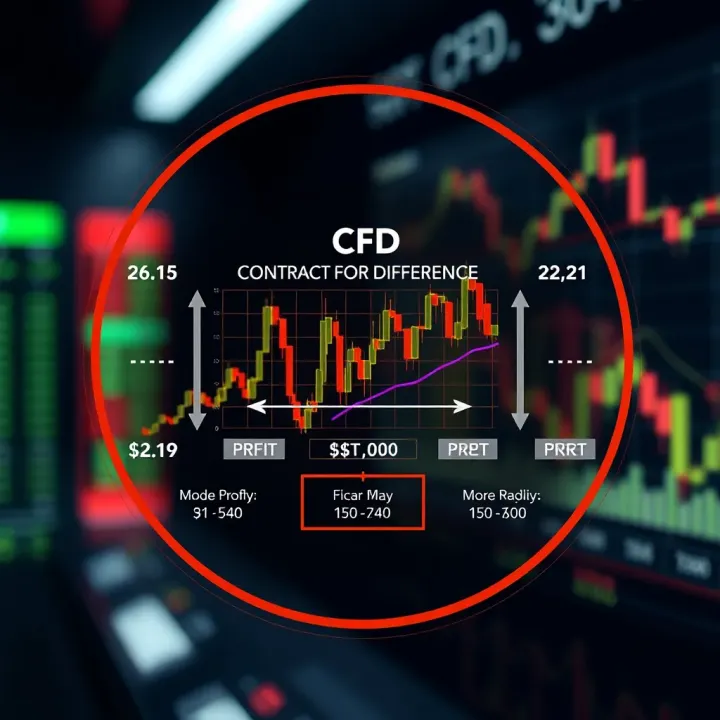
📈 Explore CFD trading basics for Kenyan traders, learn strategies, understand risks, and navigate local regulations to trade smartly.
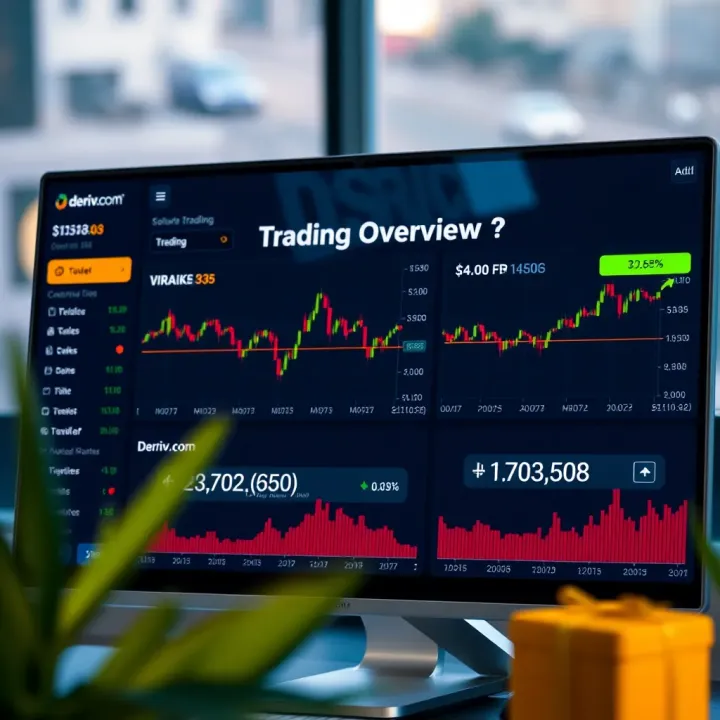
Explore Deriv.com in Kenya 🇰🇪: features, account types, trading tools, security, deposits, and support to trade confidently online 📈💼
Based on 11 reviews